Team Building Activities: What Makes an Experience Worthwhile?
When was the last time your team attended a team-building event and talked about it weeks later?
Some activities are enjoyable in the moment but quickly forgotten. Others introduce a new experience, encourage people to interact differently and give teams something worth reflecting on.
The difference isn’t always the activity itself.
It’s what people are invited to do, how they participate and what they take away from the experience.
For HR managers, team leaders and organisations planning team building activities, these considerations can be just as important as choosing a venue or setting a budget.
What Should Team Building Activities Actually Achieve?
Team building is often associated with having fun outside the workplace.
Enjoyment matters. Giving colleagues an opportunity to spend time together in a different environment can be valuable.
But a successful team activity doesn’t necessarily need to be the loudest, most competitive or most elaborate experience.
The starting point should be understanding what your team needs.
Are colleagues looking for opportunities to get to know one another?
Would the group benefit from practising collaboration?
Or is the goal simply to celebrate a demanding period of work and spend time together?
Different objectives call for different experiences.
A team that rarely meets in person may value relaxed conversation. A group navigating new responsibilities might benefit from an activity that encourages shared decisions.
Knowing the purpose makes it easier to choose an experience that suits the people attending.
Why Participation Matters More Than Spectacle
An impressive event can attract attention without necessarily encouraging meaningful participation.
Imagine two different team-building experiences.
In the first, employees watch an entertaining performance together.
In the second, they’re invited to work on something unfamiliar, make individual choices and contribute to a shared activity.
Both might be enjoyable.
However, the second offers more opportunities for employees to become active participants rather than spectators.
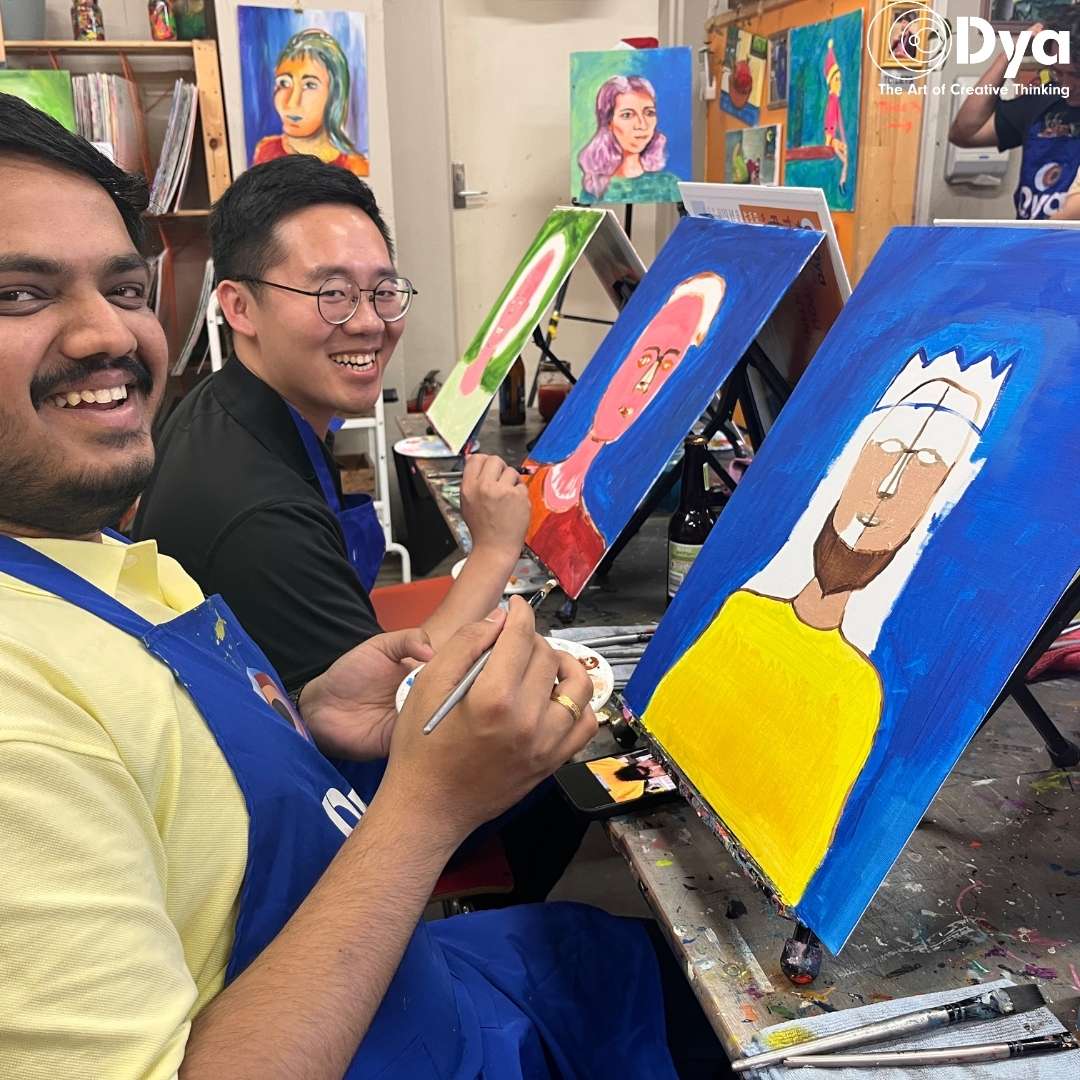
Hands-on experiences can encourage people to contribute in ways that feel different from their usual workplace roles.
Someone who rarely speaks during meetings may enjoy expressing ideas visually. A colleague known for being highly organised might discover the pleasure of experimenting without a detailed plan.
These moments don’t automatically transform workplace relationships, but they can create opportunities to see colleagues from a different perspective.

Five Things to Look for in Team Building Activities
1. An Experience Everyone Can Approach
Not everyone enjoys competition, public speaking or physically demanding challenges.
An activity that suits one employee may feel uncomfortable or inaccessible to another.
When planning a group experience, consider different abilities, personalities and levels of confidence.
Creative workshops can offer a useful alternative because participation doesn’t need to depend on previous artistic experience.
For example, Dya Australia’s Paint in the Dark experience introduces painting in an unusual illuminated environment.
The activity offers a shared creative challenge without requiring employees to arrive with established painting skills.
The important consideration is creating an environment where participants feel comfortable getting involved.
2. Opportunities for Genuine Interaction
Working in the same organisation doesn’t always mean employees have opportunities to connect.
People may spend most of their time within departments, communicate primarily online or interact only when a project requires it.
Team building activities can introduce a different reason to start a conversation.
A creative challenge might prompt someone to ask about a colleague’s idea, compare approaches or share an unexpected discovery.
These interactions can feel more natural when conversation develops around something participants are doing together.
The aim isn’t to force everyone to become friends.
It’s to create opportunities for people to engage beyond their usual workplace routines.
3. Room for Different Perspectives
In the workplace, people often approach problems through the responsibilities of their roles.
A creative experience can temporarily change that dynamic.
Instead of focusing on job titles or established processes, participants may be invited to interpret a theme, explore materials or consider unfamiliar possibilities.
Different responses become part of the experience.
One person might take a practical approach, while another experiments with an unexpected idea.
Recognising these differences can encourage curiosity about how colleagues think.
For team leaders, this is a useful reminder that collaboration doesn’t require everyone to approach a challenge in the same way.
4. A Shared Goal Without Unnecessary Pressure
Competition can be exciting, but it isn’t the only way to bring people together.
Some teams may respond better to a collaborative activity where the focus is on contributing to something shared.
Dya Australia’s One and All workshop offers an example.
Participants contribute to a collective artwork, bringing individual creative approaches into a larger piece.
The experience provides opportunities to consider how separate contributions can form part of a shared outcome.
This can be particularly relevant for organisations interested in collaboration, team identity and recognising different perspectives.
5. Something Worth Reflecting On
A team-building activity doesn’t need a formal presentation afterwards to have value.
Sometimes, a few thoughtful questions can help participants make connections between the experience and their everyday work.
What surprised you?
Did you approach the activity differently from someone else?
Was there a moment when you changed your original idea?
What helped the group work together?
These questions can encourage employees to consider the experience beyond the finished activity.
Reflection also gives team leaders an opportunity to understand what participants found interesting, challenging or enjoyable.
Should Team Building Be Fun or Purposeful?
It doesn’t have to be a choice between the two.
An enjoyable activity can still provide opportunities for learning, communication and collaboration.
Likewise, a purposeful experience doesn’t need to feel like another workplace training session.
The balance depends on the group’s needs.
For a team celebrating the end of a busy year, the priority may be connection and enjoyment.
For a newly formed department, an activity that encourages communication and shared decisions may be more relevant.
For employees experiencing constant change, a creative challenge might offer an opportunity to practise exploring unfamiliar situations in a low-pressure setting.
Rather than choosing an activity because it’s popular, consider the experience you want people to have.
Choosing Team Building Activities in Melbourne
Melbourne offers a wide range of group experiences, from food and entertainment to outdoor adventures and creative workshops.
The challenge isn’t finding something to do.
It’s choosing an activity that suits your team.
Before booking, consider the practical details.
How many people will attend? Does the venue meet accessibility needs? How much time is available? Would employees prefer an onsite experience or an opportunity to visit a different location?
It’s also worth considering how the activity will accommodate people with different interests and levels of experience.
Dya Australia’s Corporate Programs include hands-on creative workshops that can be adapted to different team-building objectives and group settings.
From individual artistic exploration to collaborative experiences, the focus is on encouraging participation and different ways of thinking.
What Makes an Experience Memorable?
The most memorable part of a team-building activity isn’t always the finished artwork, the venue or the event itself.
It might be discovering something unexpected about a colleague.
It could be the moment someone tries an unfamiliar technique or realises that a challenge has more than one possible solution.
Sometimes, it’s simply having time to connect without the usual demands of the working day.
These experiences may not produce immediate, measurable changes in team performance.
But they can provide opportunities for interaction, curiosity and shared discovery.
And that makes them worth considering when planning an event for your organisation.
Make Your Next Team Experience Count
Good team building begins with understanding your people.
An activity doesn’t need to be complicated to be meaningful. It needs to be approachable, engaging and suited to the purpose of bringing everyone together.
When employees have opportunities to participate, experiment and connect in different ways, a team event can become more than another date on the calendar.
Come and surprise yourself. Embrace a new perspective.
Planning team building activities for your organisation? Contact us to explore creative experiences designed around your team.