Soft Skills in the Workplace: How Creativity Builds Stronger Teams
Technical expertise may help people perform their roles, but strong teams rely on more than technical knowledge. Communication, collaboration, adaptability, problem-solving, and creative thinking all shape how effectively people work together.
These soft skills in the workplace become especially important when teams face change, solve complex problems, or need to approach familiar challenges differently. Creativity provides a practical way to strengthen these capabilities by encouraging people to experiment, communicate, and explore ideas together.
At Dya Australia, creative experiences are designed to move people beyond routine ways of thinking and create opportunities for teams to connect in a different environment.
Why Soft Skills Matter in the Workplace
Work rarely happens in isolation. People need to communicate ideas clearly, understand different perspectives, respond to change, and contribute towards shared goals.
Unlike technical skills, these capabilities cannot always be developed through instruction alone. They grow through experience and interaction.
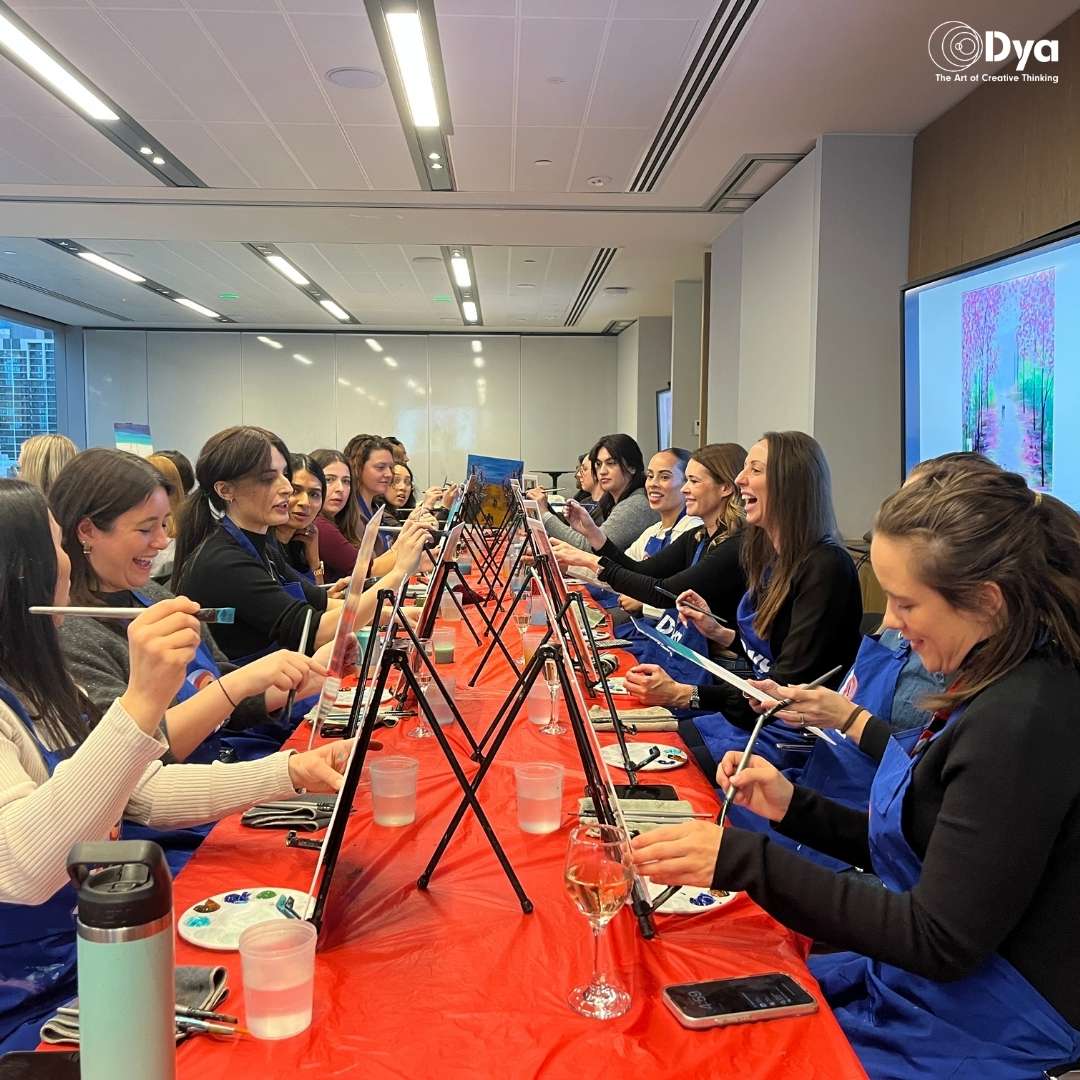
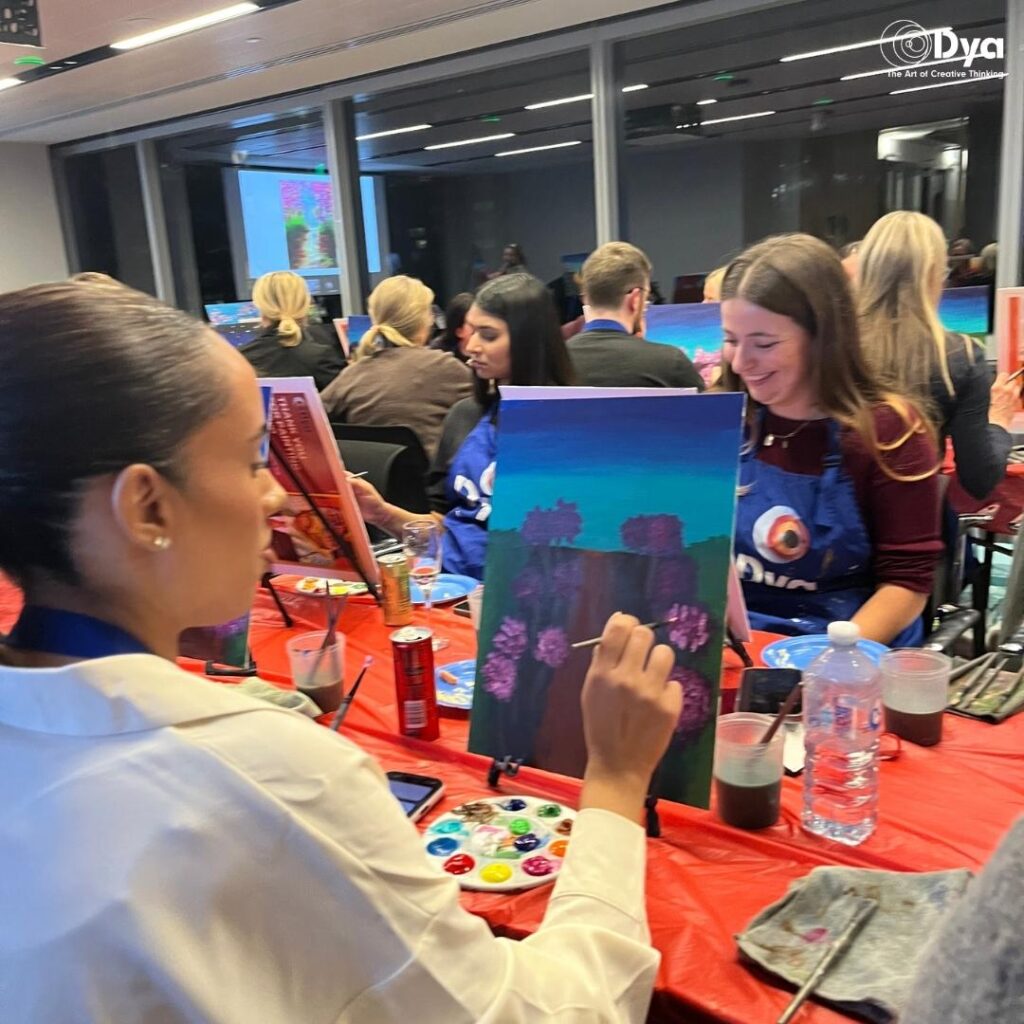
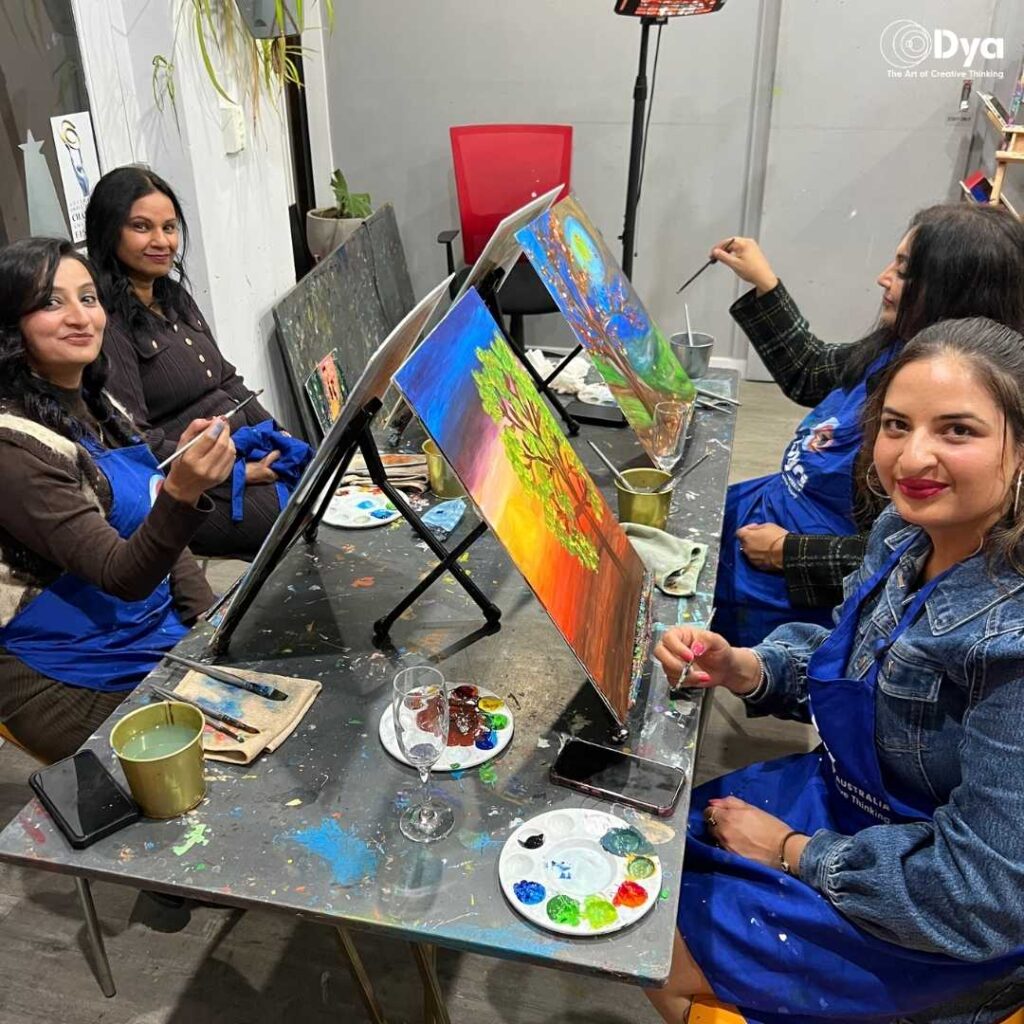
A creative challenge can place teams in unfamiliar situations where there is no single correct answer. Participants need to share ideas, make decisions, listen to one another, and adapt as the activity develops.
The artwork may be the visible result, but much of the value lies in the process of creating it together.
How Creativity Strengthens Workplace Skills
Creativity gives teams permission to explore possibilities without immediately focusing on the perfect solution.
When people experiment together, they practise many of the behaviours that support effective teamwork.
Communication develops as participants explain ideas and respond to different viewpoints.
Collaboration becomes essential when individual contributions need to become part of a shared outcome.
Problem-solving emerges as teams experiment, make adjustments, and find alternative approaches.
Adaptability develops when an idea changes direction or an unexpected result creates a new possibility.
Creative thinking encourages people to question familiar approaches and consider what else might work.
These experiences make soft skills active rather than theoretical.
Creative Thinking Beyond the Usual Work Environment
Workplace routines are valuable, but they can also shape how people approach problems.
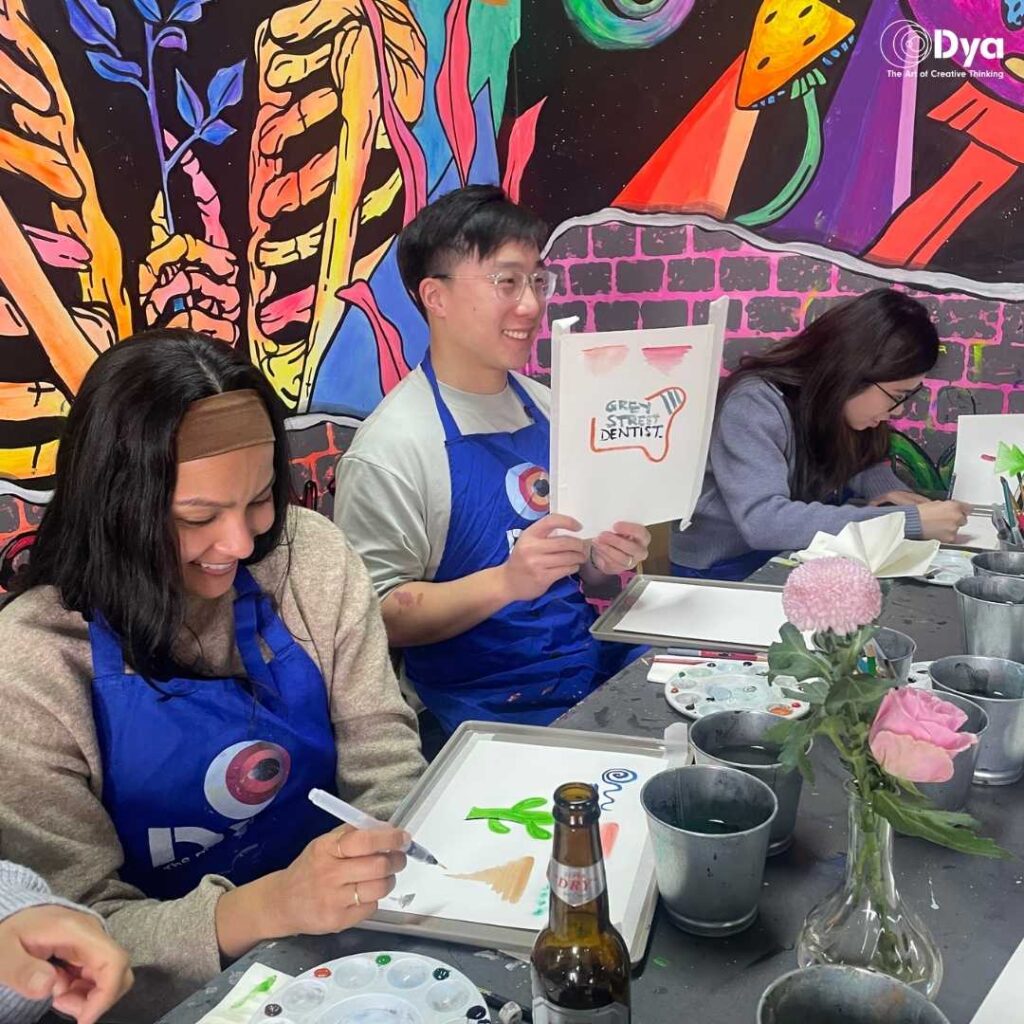
Moving into a creative environment changes the context. Titles, departments, and everyday responsibilities become less central while the team focuses on a shared challenge.
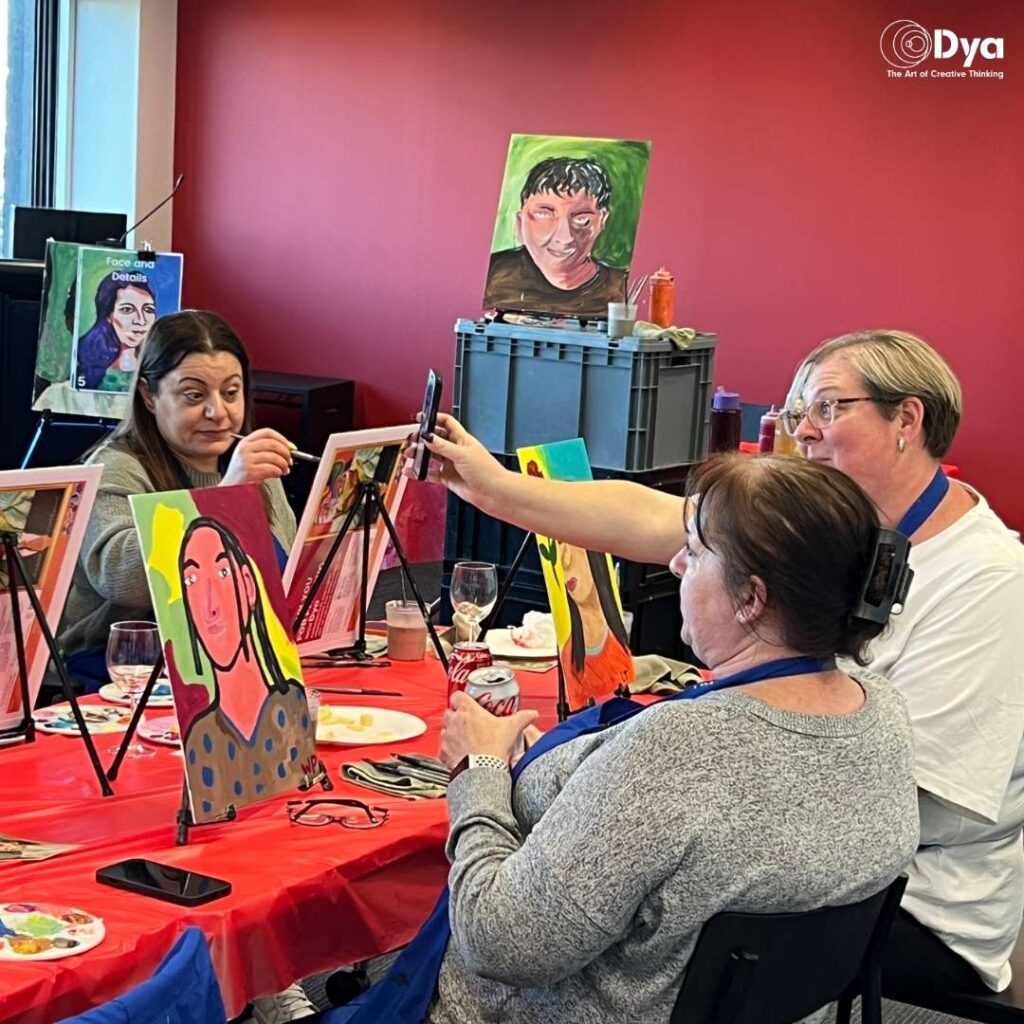
Someone who rarely speaks during meetings may contribute an unexpected idea. Another person may discover that stepping back and listening leads to a stronger outcome. Teams can also see how differently colleagues interpret the same challenge.
These moments can reveal new ways of communicating and working together.
From Team Building to Team Development
Team building is often associated with having fun together. While enjoyment matters, a well-designed creative experience can offer something deeper.
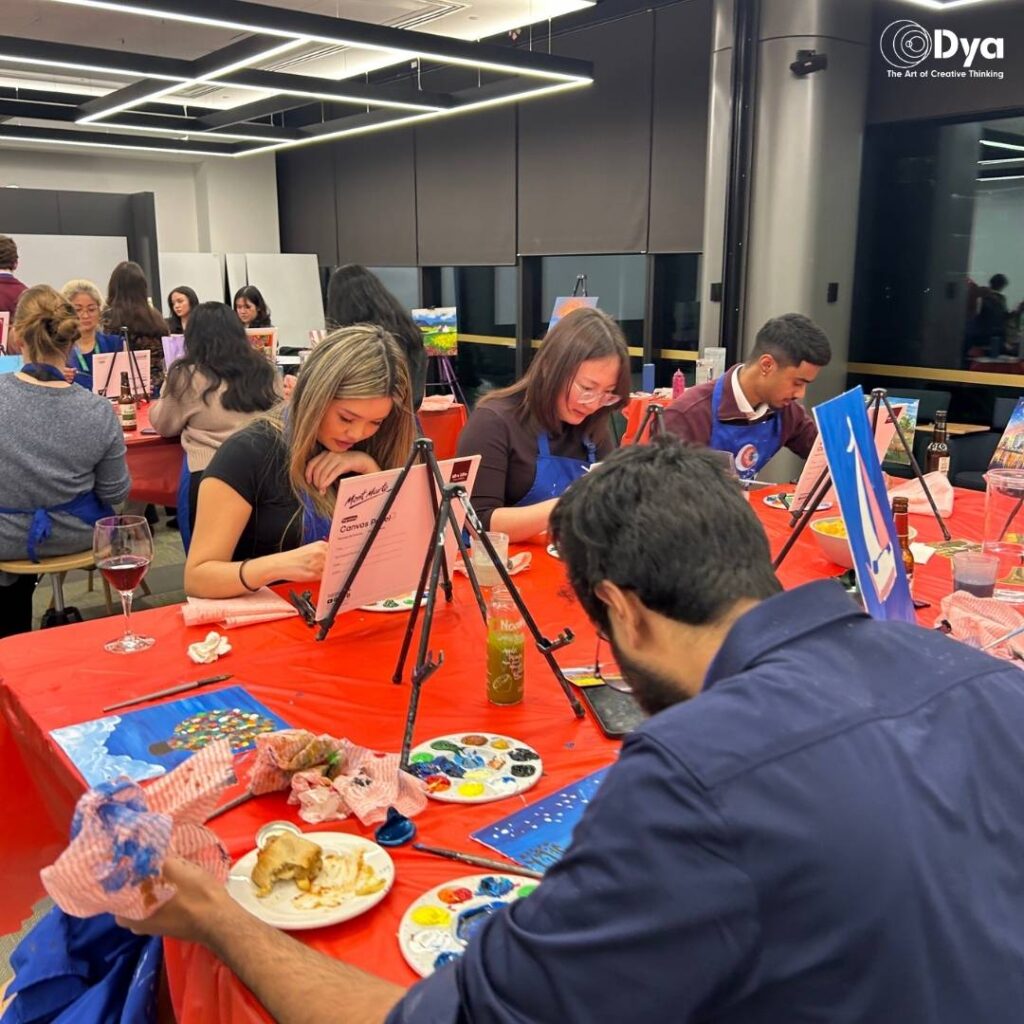
The creative process gives teams an opportunity to practise collaboration in real time. They make choices together, respond to uncertainty, and see how individual perspectives contribute to the final result.
This shifts the experience from simply doing something together to learning something about how the team works together.
Building Stronger Teams Through Shared Creativity
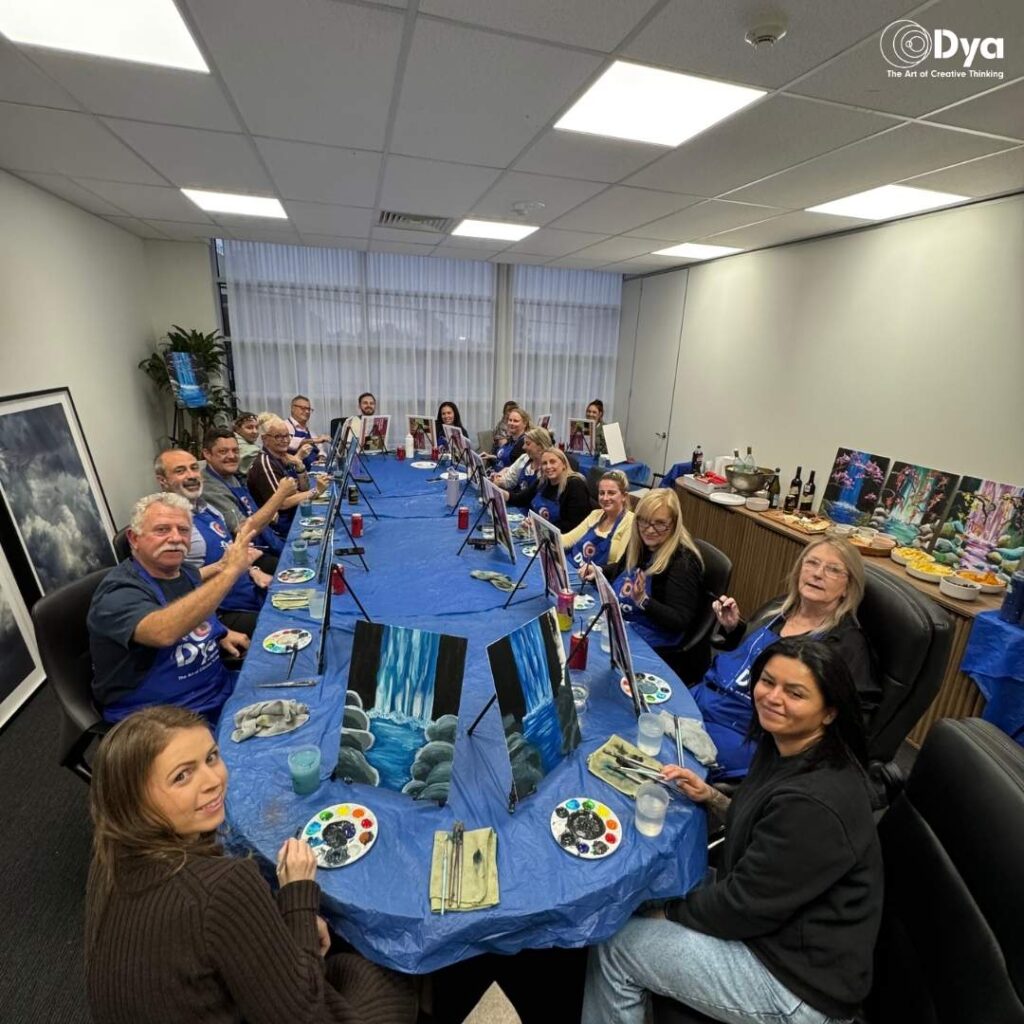
Strong teams are not built by everyone thinking in the same way. They develop when different perspectives can be expressed, considered, and combined effectively.
Creative experiences provide space for those differences to become visible.
A blank canvas, unfamiliar material, or collaborative challenge creates a starting point where everyone can contribute. As ideas develop, teams practise listening, negotiating, experimenting, and supporting one another.
The result is not only something they have created together. It is also a shared experience that can strengthen connection beyond the workshop.
Creative Corporate Workshops in Melbourne
For organisations looking to develop soft skills in the workplace, creative workshops offer an alternative to traditional professional development.
Dya Australia’s corporate workshops use hands-on artistic experiences to encourage creative thinking, collaboration, communication, and connection. Programs can support team development while giving employees the opportunity to step outside their usual environment and experience their colleagues from a different perspective.
Whether the goal is strengthening collaboration, encouraging creative problem-solving, or simply reconnecting a team, creativity can provide a meaningful starting point.
Creativity Is a Workplace Skill
Creativity is not limited to artists or traditionally creative roles.
It influences how people generate ideas, respond to challenges, communicate perspectives, and adapt when circumstances change. Combined with strong interpersonal skills, creative thinking can help teams become more flexible and effective.
Developing soft skills therefore does not always need to happen in a seminar room.
Sometimes, giving people something unfamiliar to create together can reveal more about teamwork than another presentation ever could.
Bring Creativity Into Your Workplace
Looking for a different approach to team development?
Explore Dya Australia’s corporate creative workshops in Melbourne and discover how hands-on creative experiences can bring teams together while supporting communication, collaboration, and creative thinking.