Leadership Development Through the Arts: How Creativity Builds Better Leaders
Leadership is often associated with strategy, decision-making, and the ability to guide others. Yet effective leadership also depends on qualities that are harder to develop through traditional training alone: adaptability, curiosity, communication, confidence, and the ability to see a challenge from more than one perspective.
Leadership development through the arts offers a different way to explore these capabilities. Creative experiences place people in situations where outcomes are not always predictable, encouraging them to experiment, make decisions, communicate ideas, and respond to change.
For leaders, these moments can provide valuable opportunities to examine not only what they create, but how they think, respond, and work with others throughout the process.
What Can the Arts Teach Us About Leadership?
Creative work and leadership have something important in common: neither always follows a predictable path.
An artist may begin with an idea only to discover that the materials, process, or emerging result requires a different approach. Leaders regularly encounter similar moments when circumstances change, information is incomplete, or a team brings perspectives they had not anticipated.
In both situations, progress requires the ability to observe what is happening, make considered decisions, and remain open to changing direction.
The arts provide a practical environment in which these behaviours can be explored without relying solely on presentations or theoretical exercises.
Creative Thinking and Leadership
Strong leadership isn’t about having every answer.
Sometimes, the more valuable leadership skill is knowing how to ask a better question.
Creative thinking encourages leaders to move beyond familiar solutions and consider different possibilities. Instead of immediately asking, “What is the correct approach?”, they can explore questions such as:
“What haven’t we considered?”
“How might someone else see this?”
“What could we try differently?”
This shift can help leaders become more comfortable exploring uncertainty while creating space for new ideas to emerge.
Learning to Lead Through Uncertainty
Creative processes rarely reveal the final outcome at the beginning.
Participants make choices, observe the results, adjust their approach, and continue developing the work. Not every decision produces what was expected, and that becomes part of the experience.
Leadership often requires the same flexibility.
Plans change. Challenges emerge. Different perspectives influence the direction of a project. Leaders need to respond without losing sight of the broader purpose.
Creative experiences provide an opportunity to practise this adaptability in real time. Rather than treating uncertainty as something that must immediately be eliminated, participants can learn to work within it, remain curious, and determine what the next step could be.
Seeing Through Different Perspectives
Leadership involves more than communicating your own ideas. It also requires the ability to listen to and understand the perspectives of others.
Art naturally demonstrates that people can encounter the same starting point and interpret it differently.
Give several people the same creative challenge and the results are unlikely to be identical. Each participant brings their own experiences, observations, preferences, and ways of thinking to the process.
For leaders, recognising the value of these differences can support stronger conversations and more thoughtful collaboration.
A different perspective does not automatically mean someone is wrong. It may reveal something the rest of the group has not yet considered.
From Individual Ideas to Shared Outcomes
Leadership becomes particularly visible when people need to create something together.
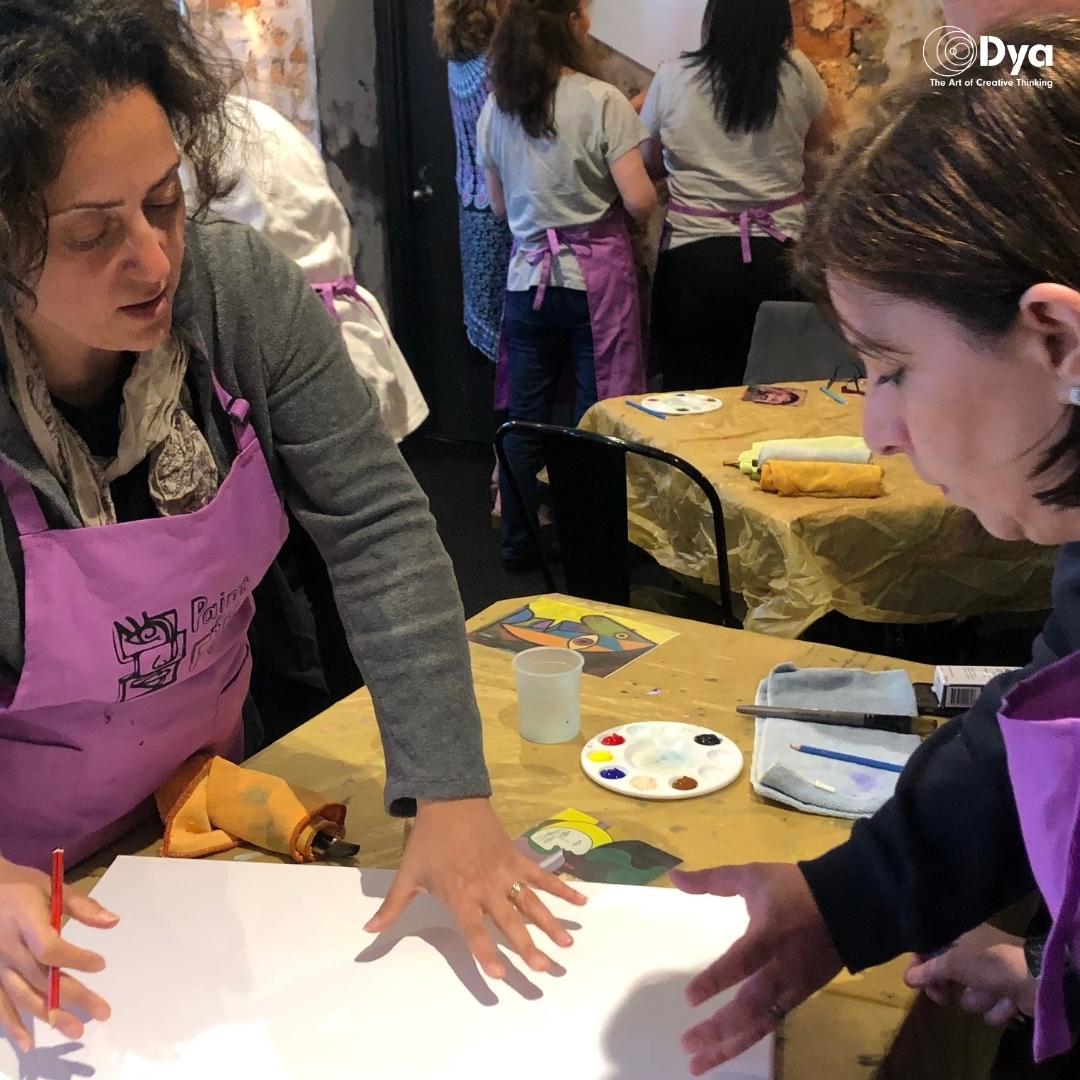
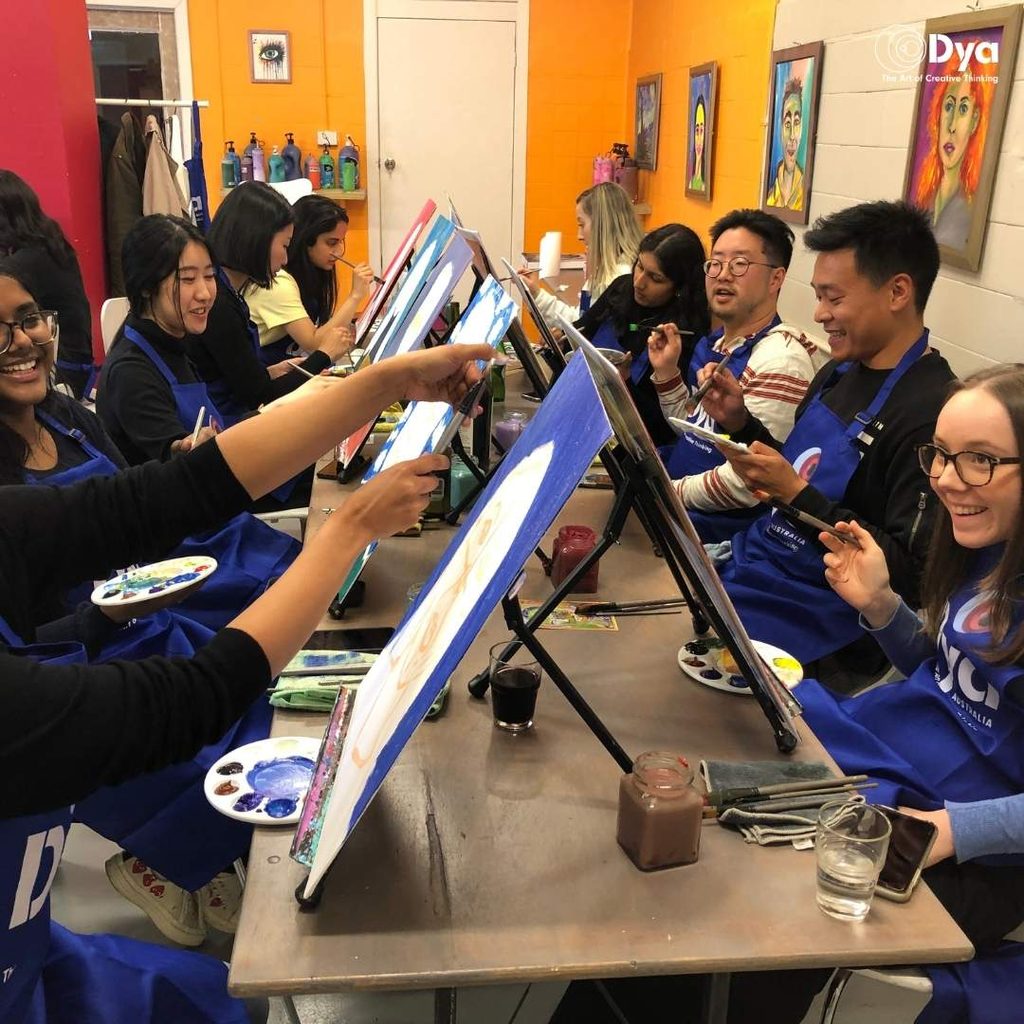
A collaborative creative experience requires participants to contribute ideas while remaining aware of the wider group. They may need to listen, negotiate, make decisions, adapt, and occasionally step back so another perspective has room to develop.
These behaviours have clear parallels with workplace leadership.
Effective leaders need to provide direction without controlling every contribution. They need to recognise individual strengths while helping people work towards a shared purpose.
Creative collaboration gives participants an opportunity to experience that balance rather than simply discuss it.
Shared Outcomes
Developing Communication Through Creativity
Not every leadership challenge is solved by speaking more.
Creative activities can encourage participants to pay closer attention to how ideas are expressed, interpreted, and developed by others.
During a collaborative process, a leader may discover when to explain an idea clearly, when to ask a question, and when listening is more valuable than directing.
These moments can create greater awareness of communication habits that may otherwise go unnoticed during everyday work.
Leadership communication then becomes less about delivering instructions and more about creating the conditions for people to contribute effectively.
Leadership Development Beyond the Training Room
Traditional leadership development has an important role, but learning does not always need to happen through presentations, frameworks, or discussion alone.
Experiential activities give participants something to respond to in the moment.
The creative process makes behaviours visible. People can notice how they approach an unfamiliar challenge, how quickly they make decisions, how they respond when something changes, and how they interact with different perspectives.
Reflection can then turn the experience into something participants can carry back into the workplace.
The artwork may stay behind, but the questions raised through creating it can continue.
Creativity as a Leadership Capability
As workplaces continue to change, leaders need to be able to navigate situations where established approaches may not provide an immediate solution.
Creativity supports this by encouraging exploration, flexible thinking, and openness to alternatives.
This doesn’t mean leaders need to become artists.
It means recognising that the creative process can develop ways of thinking that are valuable for leadership: observing carefully, remaining curious, experimenting thoughtfully, learning from unexpected outcomes, and recognising the potential in different perspectives.
Leadership development through the arts can therefore offer something beyond learning about leadership.
It gives people an opportunity to experience how they lead.
Explore Leadership Through Creativity
Leadership grows through experience, reflection, and the willingness to approach challenges differently.
At Dya Australia, our Corporate Programs use creative experiences to encourage new ways of thinking, communicating, and working together.
Explore our Corporate Programs to discover how creativity can become part of your organisation’s professional development, or get in touch with Dya Australia to discuss a creative experience for your team.