Creative Thinking for Students: Learning to Explore Different Possibilities
Every classroom brings together students with different ideas, experiences and ways of understanding the world.
Some students are comfortable sharing their thoughts. Others may hesitate when they are unsure of the answer or worried about making a mistake.
Encouraging creative thinking for students means giving young people opportunities to question, experiment and discover that there can be more than one way to approach a challenge.
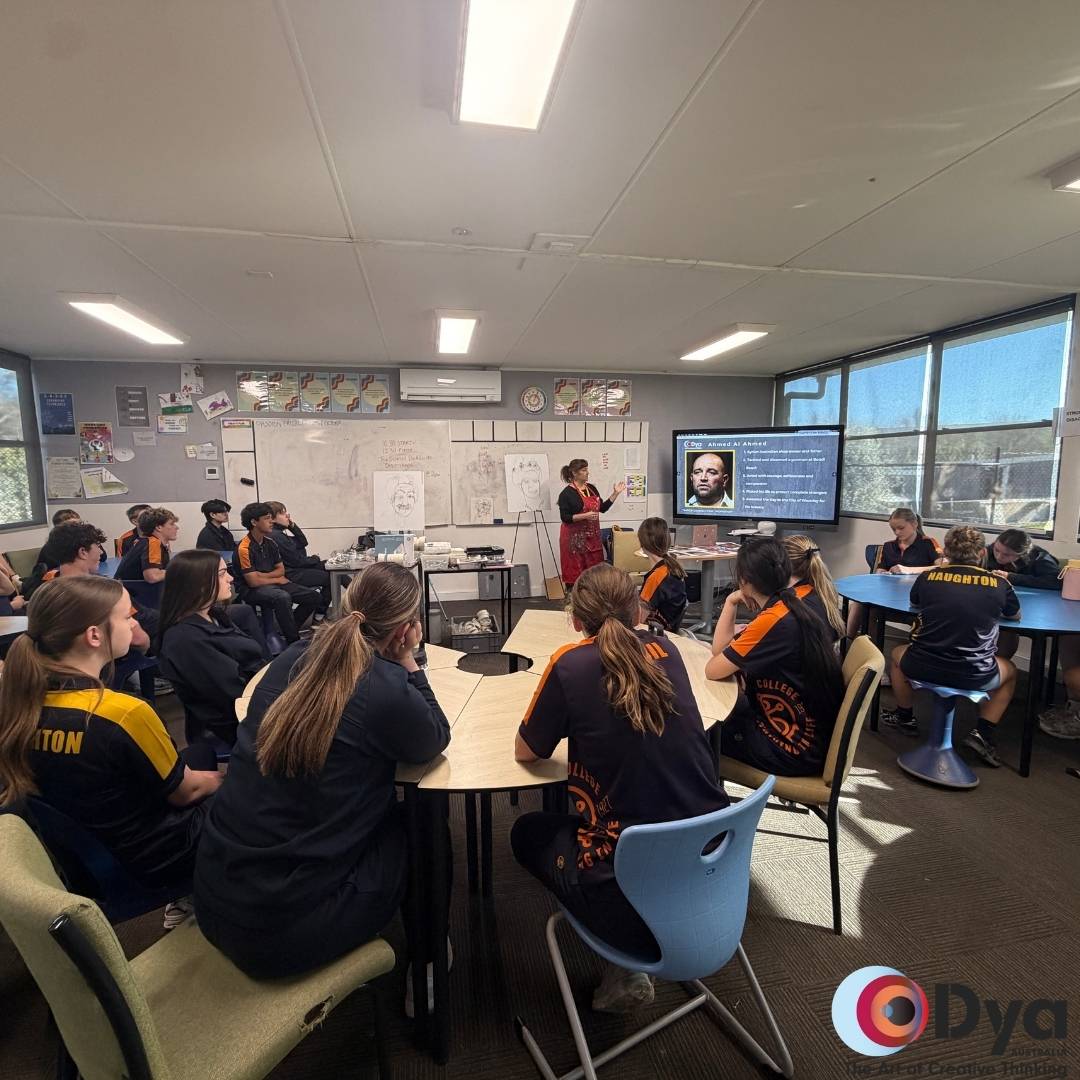
At Dya Australia, creative learning experiences use art as a starting point for exploring ideas, developing curiosity and encouraging students to think beyond familiar answers.
Why Creative Thinking Matters in Education
Learning is not always about finding the correct answer as quickly as possible.
Students also benefit from opportunities to explore how ideas develop, consider alternatives and explain their thinking.
Creative thinking encourages students to ask questions such as:
- What else could this become?
- Is there another way to approach this?
- What happens if I change something?
- How might someone else see this differently?
These questions encourage students to look beyond their first response.
They also create opportunities to develop observation, communication and problem-solving skills through practical experiences.
Learning Through Experimentation
Creative activities allow students to explore ideas through making and doing.
A student might begin with a particular image in mind, only to discover that the materials behave differently from what they expected.
A colour may change when mixed with another. A shape might develop into something unexpected. A new technique could lead to an entirely different result.
Instead of treating these moments as mistakes, students can explore what happens next.
This process encourages curiosity and helps students recognise that learning can involve testing, adjusting and reconsidering ideas.
Through creative thinking activities for students, experimentation becomes part of the learning experience rather than something to avoid.
Exploring Different Perspectives Through Art
One of the valuable aspects of creative learning is that students can approach the same activity in different ways.
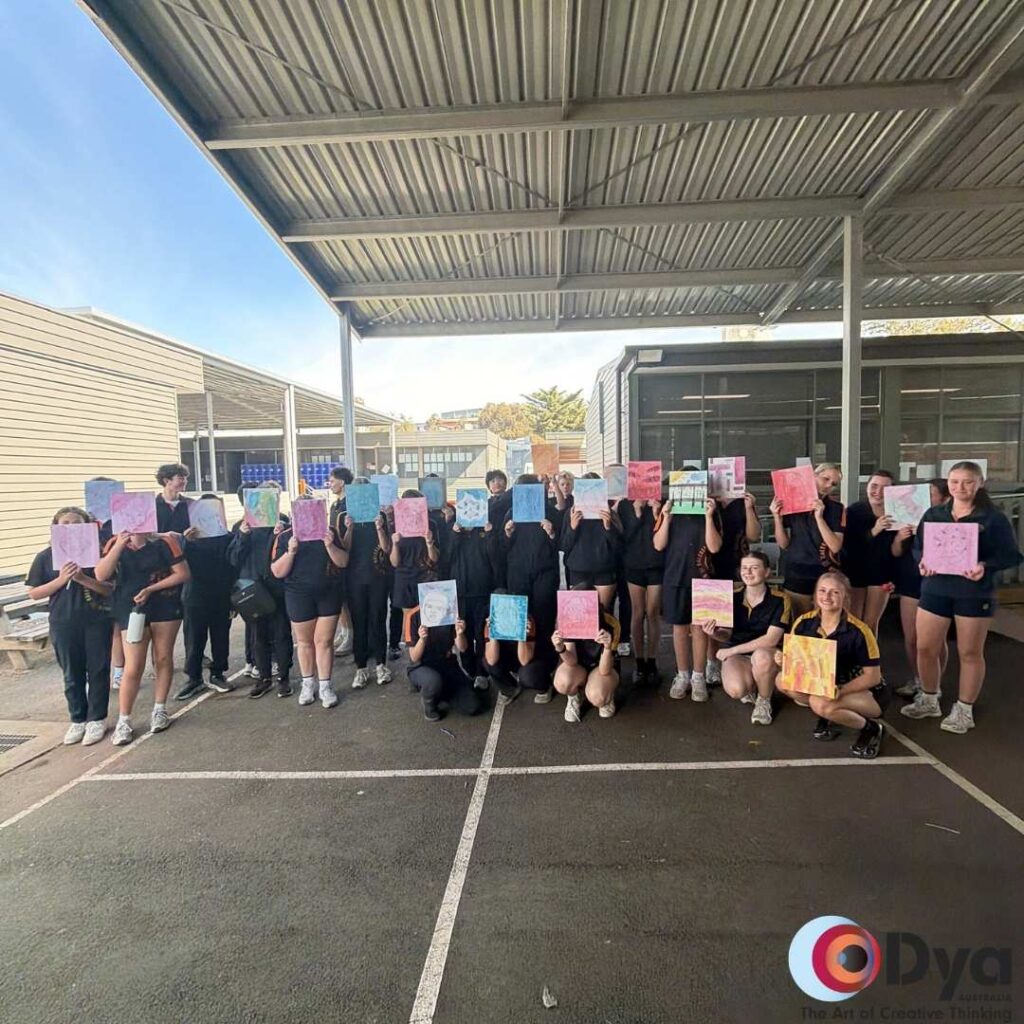
Give a group a shared starting point and each student may respond with their own interpretation.
These differences provide opportunities for discussion.
Students can observe how others have approached the task, explain their decisions and discover ideas they may not have considered independently.
The aim is not for every artwork to look the same.
It is to encourage students to recognise that different perspectives can contribute to learning.
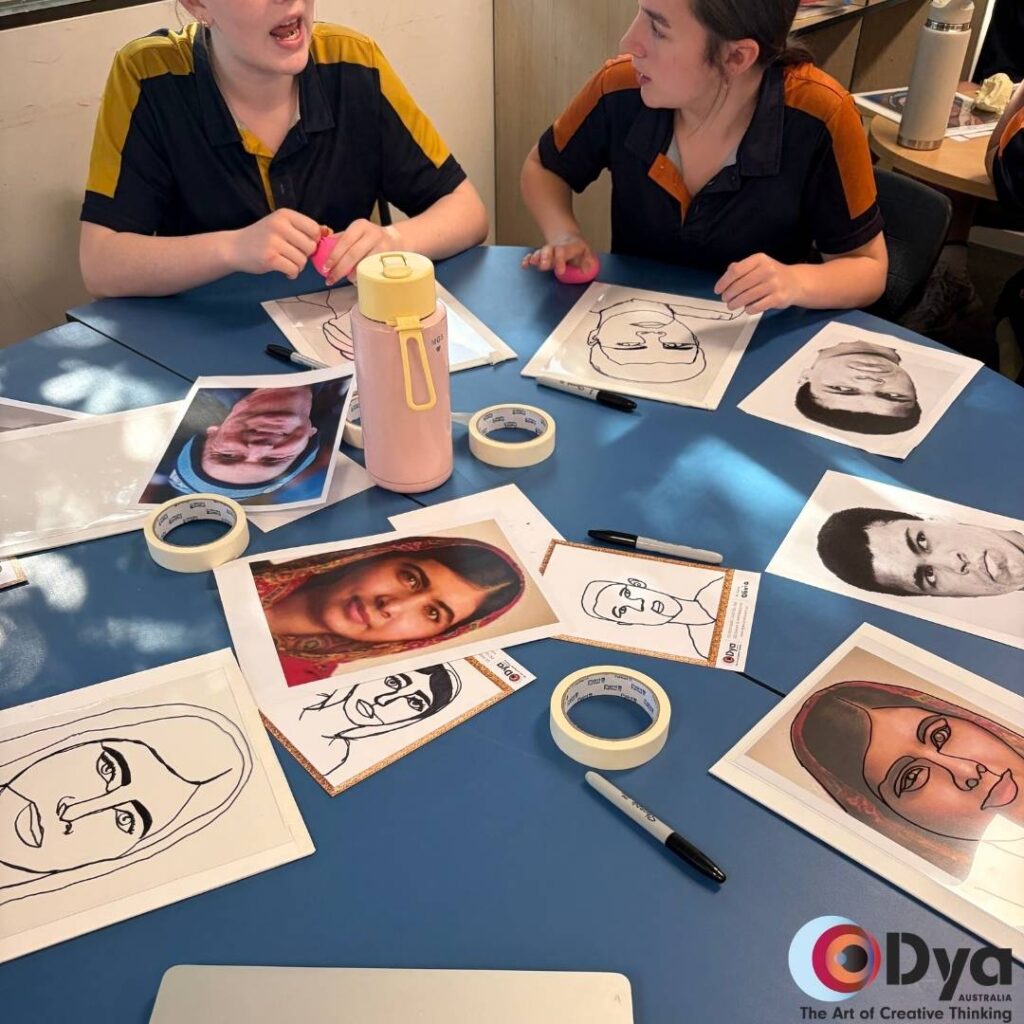
Dya Education Programs That Encourage Creative Thinking
Dya Australia’s education experiences use different artistic processes to encourage exploration, observation and creative expression.
Thinking Through Colour: Exploring How Ideas Become Art
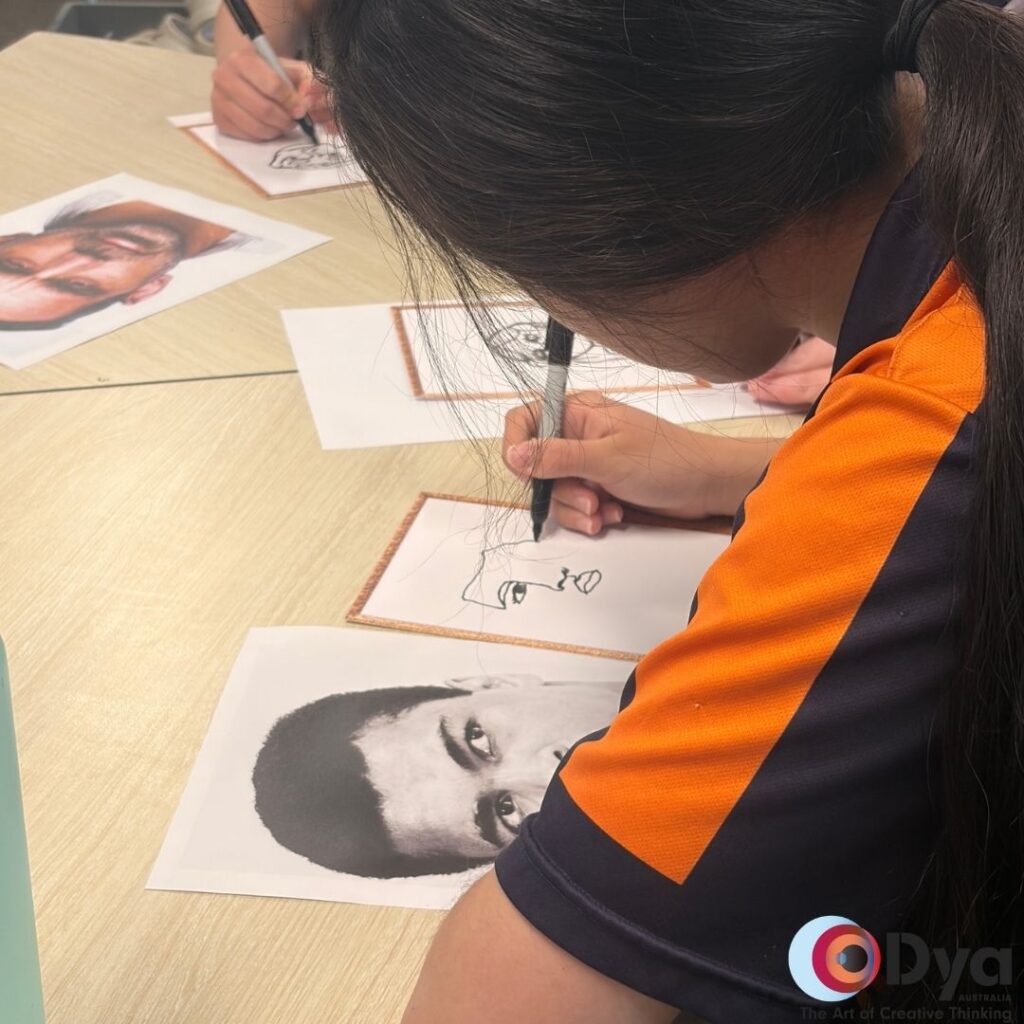
Thinking Through Colour introduces students to the relationship between ideas, observation and artistic expression.
Through opportunities to observe, experiment and create, students explore how artists communicate ideas visually.
The experience encourages students to consider how colours, techniques and different interpretations can influence an artwork.
Rather than simply copying an image, students are invited to engage with the thinking behind the creative process.
Inventions from Nature: Finding Ideas in the World Around Us
Inventions from Nature encourages students to look closely at the natural world as a source of inspiration.
Through observation and creative exploration, students can consider how shapes, patterns and structures found in nature might inspire new ideas.
The experience provides a starting point for questioning familiar objects and imagining different possibilities.
It connects observation with creative problem-solving and encourages students to consider how an idea might develop into something new.
My View: Recognising Different Perspectives
My View encourages students to explore individual perspectives through creative expression.
Students can interpret a shared starting point in their own way, creating opportunities to recognise how differently people observe and respond to the same subject.
When individual contributions become part of a wider creative experience, students can also explore the relationship between personal expression and collaboration.
The process highlights how different viewpoints can contribute to a shared understanding.
Creating Space for Students to Think Independently
Students do not always need detailed instructions for every decision they make.
Sometimes, providing a clear starting point while leaving room for interpretation can encourage greater independence.
When students are invited to choose colours, explore materials or develop their own ideas, they must make decisions about how to proceed.
They may need to reconsider an approach, respond to an unexpected result or explain why they made a particular choice.
These experiences create opportunities to practise independent thinking within a supportive learning environment.
For educators exploring creative learning approaches, hands-on art experiences can complement classroom activities by providing another way for students to engage with ideas.
Connecting Creativity With Classroom Learning
Creative thinking is relevant beyond the visual arts.
Students use it when developing stories, exploring scientific questions, solving mathematical problems or working with others on shared challenges.
The ability to consider alternatives, recognise patterns and experiment with possibilities can support learning across different subjects.
Art provides a practical setting where students can experience these thinking processes through observation and creation.
The creative activity itself is only one part of the learning opportunity.
Discussion and reflection can help students recognise the decisions they made, the challenges they encountered and the different approaches they discovered.
Encouraging Curiosity Beyond the Classroom
Developing creative thinking does not require every student to become an artist.
It means encouraging young people to remain curious, explore unfamiliar ideas and recognise that their first answer may not be their only option.
Through hands-on experiences, students can practise observing, questioning and experimenting in ways that make their thinking visible.
For schools exploring school incursions in Melbourne and other creative learning experiences, Dya Australia’s Education Programs offer opportunities to bring these approaches into student learning.
Every New Idea Begins With Curiosity
Creative thinking begins when students are given permission to ask questions and explore possibilities.
An unexpected result can become a new direction. A different perspective can lead to a new understanding. A simple observation can become the starting point for an original idea.
By making space for these experiences, educators can encourage students to approach learning with curiosity, flexibility and a willingness to try.
Come and surprise yourself. Embrace a new perspective.
Looking to bring creative thinking into your school? Contact us to explore Dya Australia’s education workshops for your students.