Turning a Thought Experiment Into a Creative Experience
What would you see if you could ride on a beam of light? What happens when a question from science becomes a starting point for art? And how does imagination help us understand something we can’t touch?
These questions shaped a three-day school excursion in Melbourne, as students visited Dya Australia’s Port Melbourne studio to take part in Riding on a Beam of Light.
The Experience
Over three days, groups of students stepped out of their usual routine and into our studio. Each session offered the same starting point: a single, open question about light, and the freedom to explore it through colour, movement and making.
Dya’s Approach
Riding on a Beam of Light draws on two very different sources of inspiration. One is Einstein’s famous thought experiment, in which he imagined travelling alongside a beam of light. The other is Picasso’s light drawings, where movement itself became the artwork.
Bringing these together creates space where scientific curiosity and abstract expression can meet. Rather than beginning with an answer, students begin with imagination.
Riding on a Beam of Light
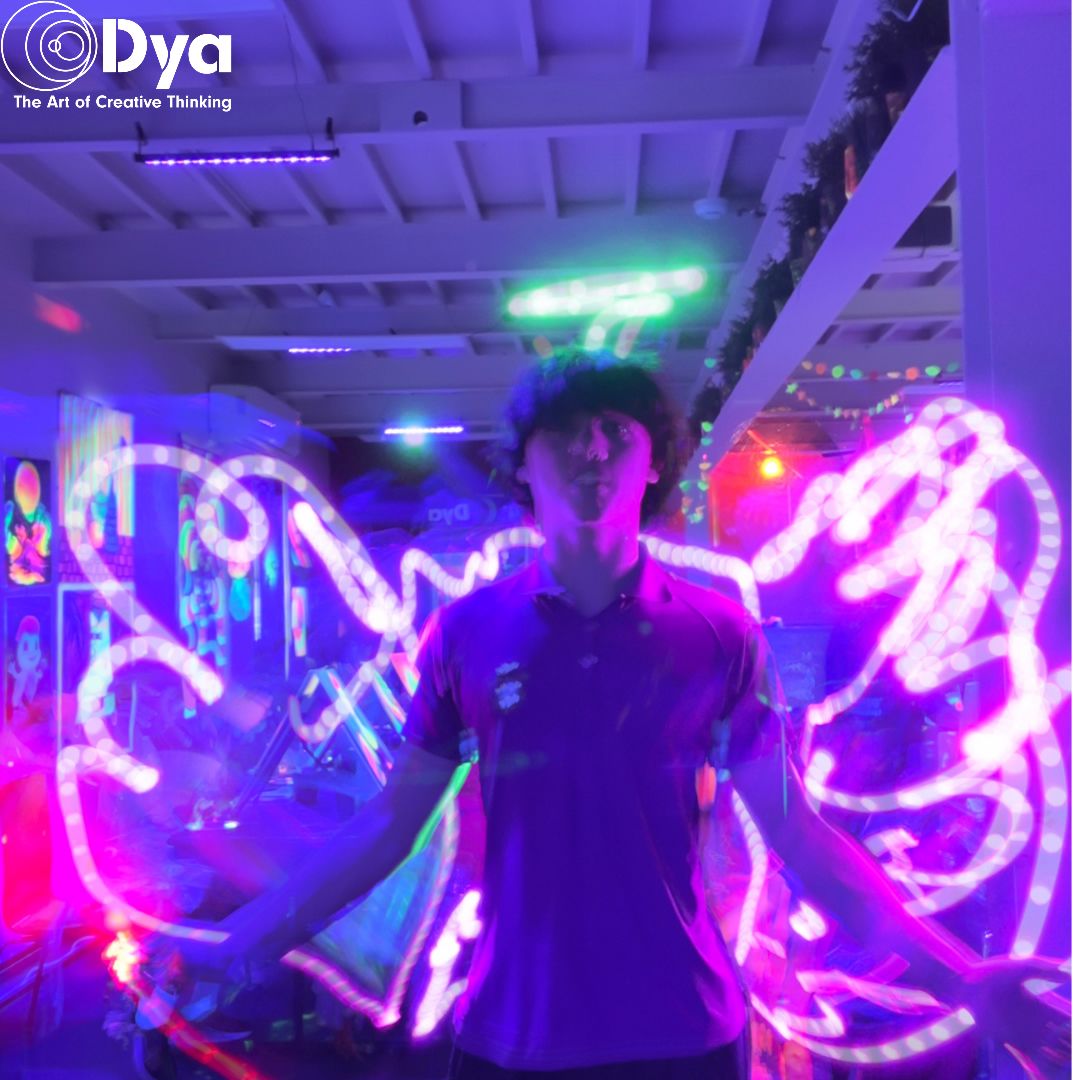
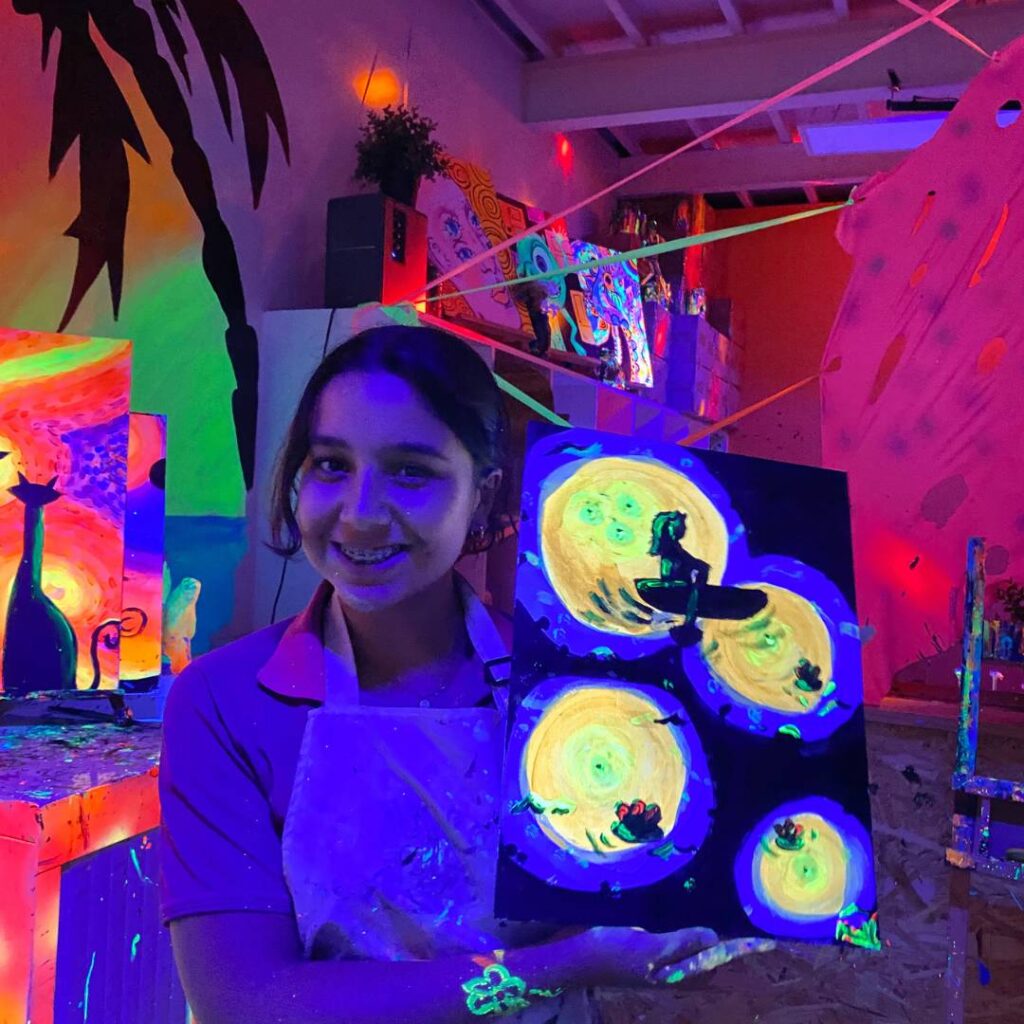
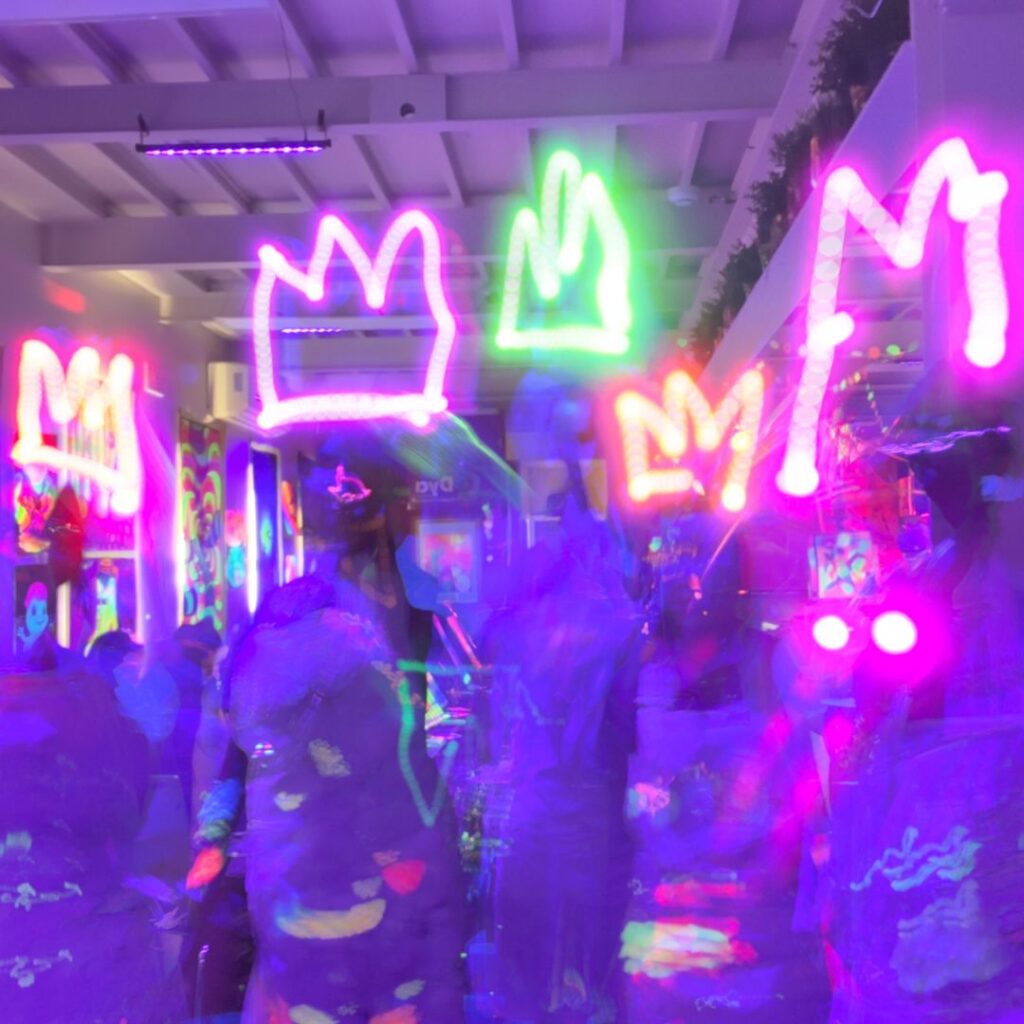
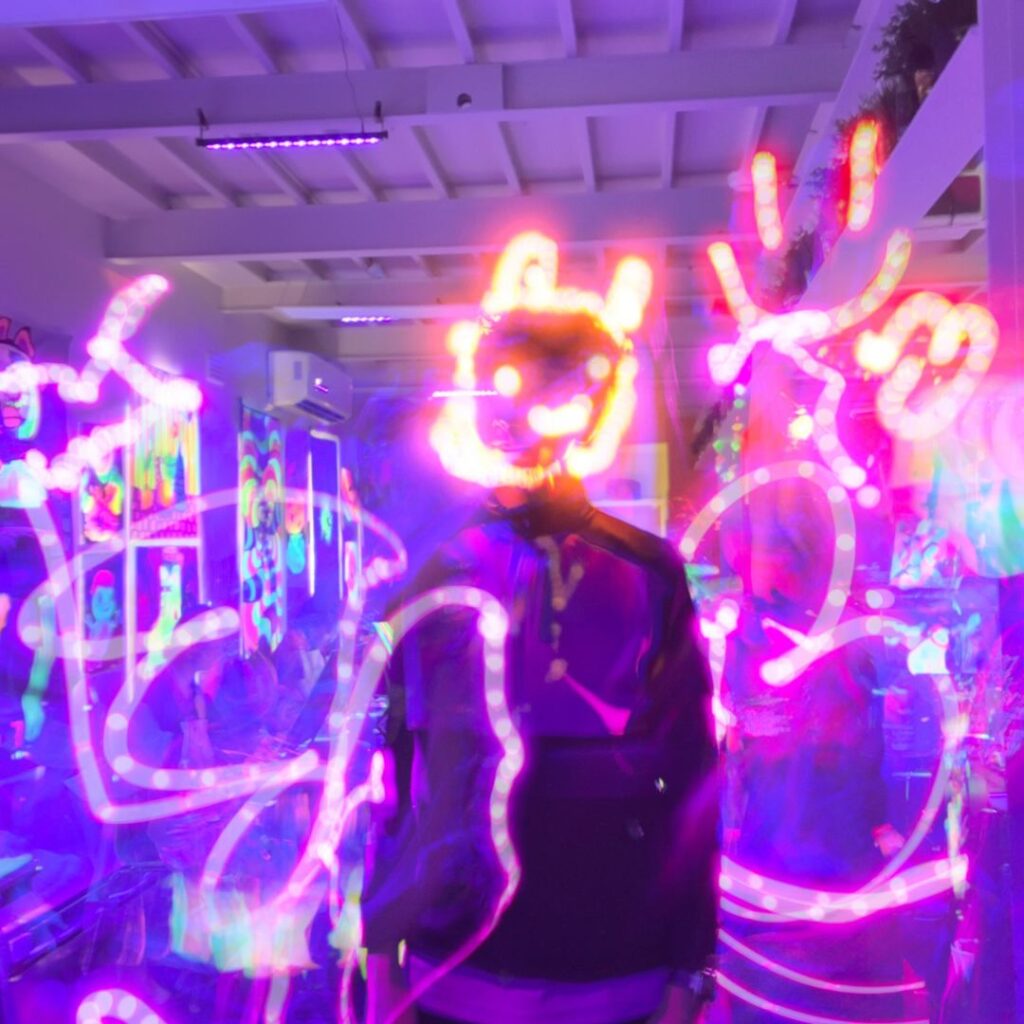
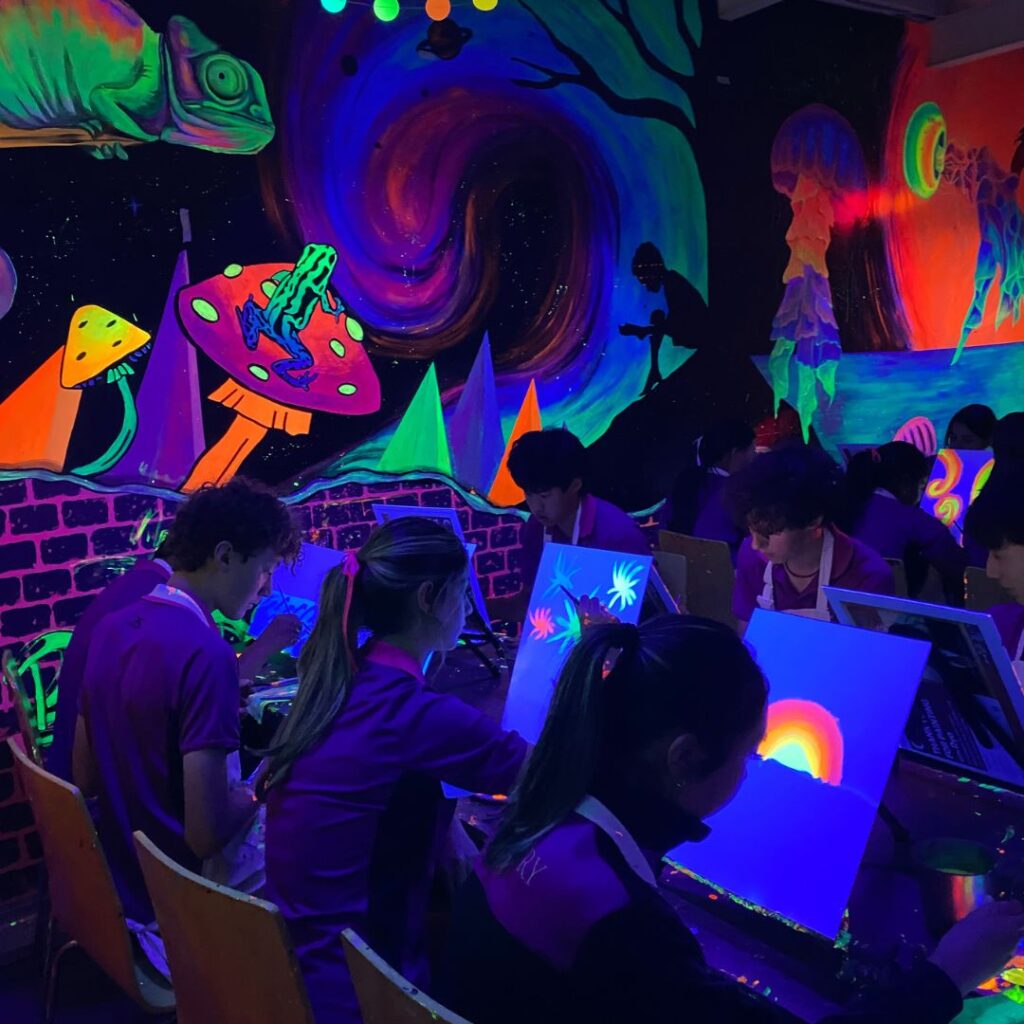
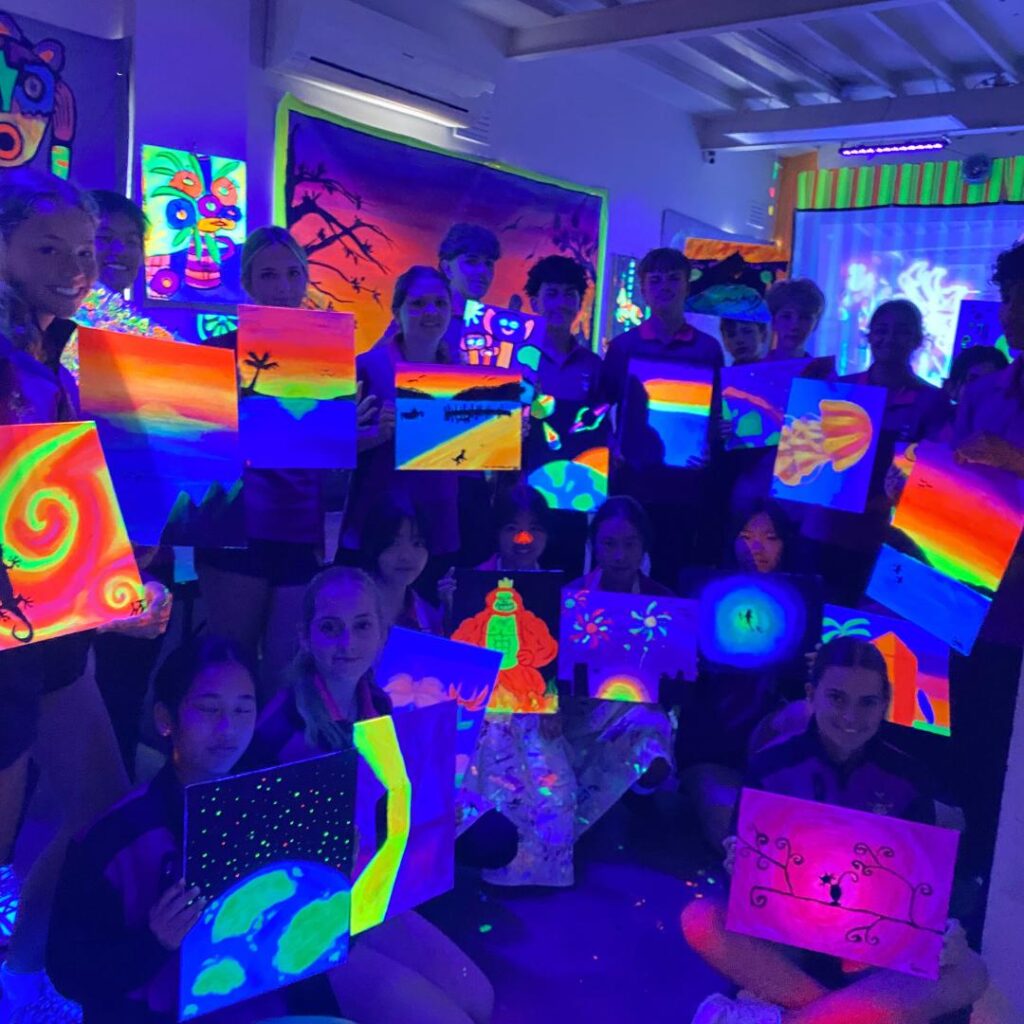
The program takes place in a pop-up UV studio, where students create glowing, movement-based paintings in the dark.
In this setting, the usual expectations around drawing and painting begin to shift. A brushstroke becomes a trail of light. A gesture becomes a mark. Students discover the more liberating side of creativity, one brushstroke at a time.
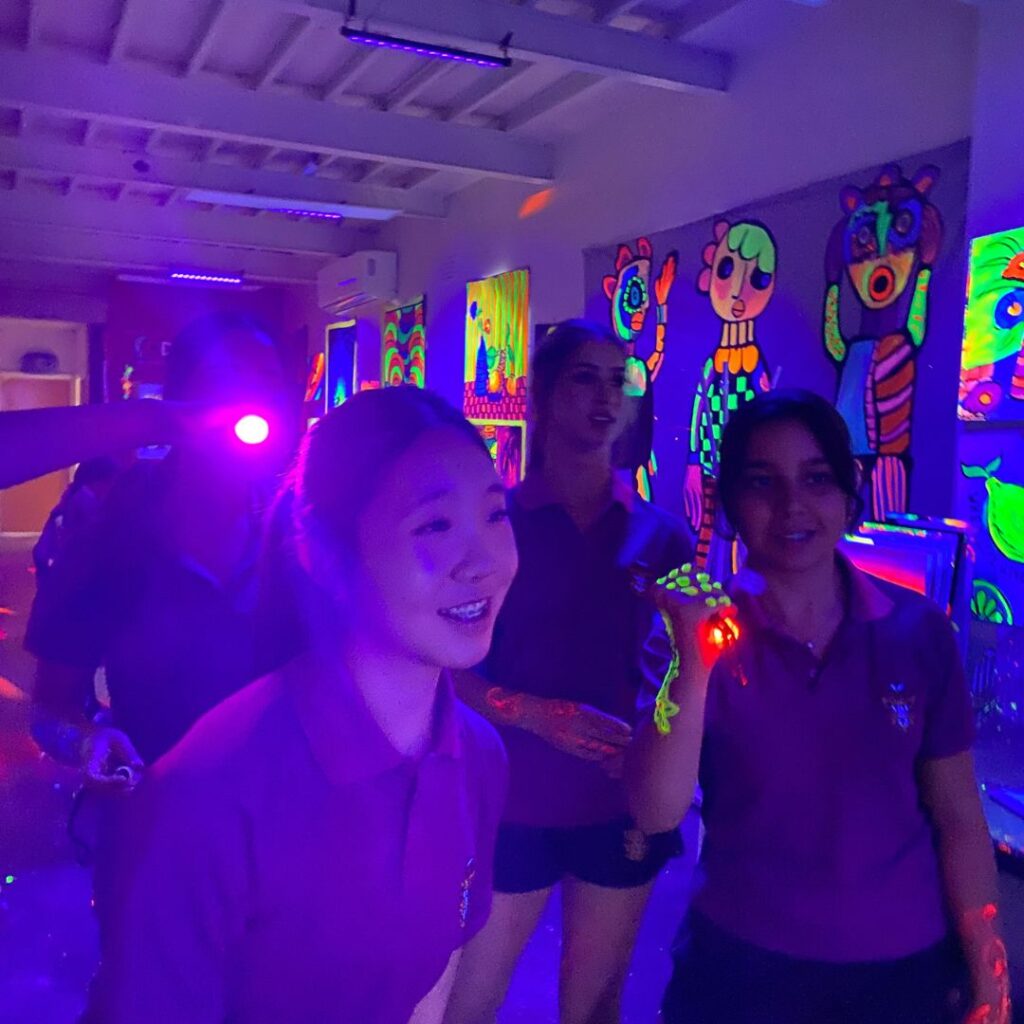
Each student creates their own artwork, while the group builds a shared creative moment together. The sensory-rich environment invites self-expression, collaboration and, often, a good deal of laughter.
Why Create in the Dark?
In a brightly lit classroom, students can see everything: their own work, the work beside them, and every line that doesn’t go to plan. It’s easy to compare, to hesitate, or to hold back.
The dark changes that. When only colour and light are visible, attention moves away from getting it right and towards what is happening in the moment. Movement becomes as important as the mark it leaves behind.
This shift connects to something at the heart of creative thinking. New ideas often appear when familiar conditions are changed. Removing the usual way of seeing invites students to notice differently, to experiment more freely, and to trust their own way of responding.
In a sense, the studio itself becomes a thought experiment. What happens to creativity when the rules of seeing are rewritten?
Learning Through Light
The program is designed to connect creative work with broader learning. It supports creative thinking, scientific literacy, self-knowledge and social awareness, with links to the Victorian Curriculum in Visual Arts, Personal and Social Capability, and Critical and Creative Thinking.
In practice, this means students are not only making art. They are generating new ideas by extending familiar concepts, reflecting on their own way of seeing, and working alongside others in a shared space.
From Question to Creation
This excursion began with a question that has no single answer.
For Dya Australia, that is often the best place to start. Open questions give students room to imagine, explore and express ideas in their own way, and to discover that creativity and inquiry can grow from the same curiosity.
Explore Dya Australia’s Education Programs to discover creative learning experiences for schools, or contact us to start planning your own.
Come and surprise yourself and embrace a new perspective.