End-of-Year Team Reflection: Why Looking Back Together Matters
Think back to the beginning of the year.
What was your team working towards? What challenges seemed important? What did you expect the next twelve months to look like?
Now think about everything that happened in between.
The projects that changed direction. The problems nobody anticipated. The small victories that barely received a mention before everyone moved on to the next task.
By December, it’s surprisingly easy to forget how much has happened.
Most workplaces spend plenty of time planning what’s next. Far fewer make space to understand what they’ve just experienced.
And perhaps that’s one of the most overlooked opportunities of the end of the year.
Before rushing towards another set of goals, what might we discover by looking back together?
Why We Remember the Big Moments and Forget the Small Ones
When someone asks how your working year went, what comes to mind?
Perhaps a major project, a difficult deadline or an achievement that received plenty of attention.
But a year at work is made up of far more than those headline moments.
There’s the colleague who helped you solve a problem on a stressful afternoon. The meeting where someone asked a question that changed everyone’s thinking. The idea that didn’t work but led to something better.
These experiences rarely appear in annual reports.
Yet they often tell us something important about how a team actually works.
End-of-year reflection creates an opportunity to notice the contributions, discoveries and everyday acts of collaboration that might otherwise disappear into the next busy week.
Reflection Isn’t the Same as a Performance Review
Mention workplace reflection and some people immediately think of performance assessments, targets and conversations about what needs improving.
But meaningful team reflection can be something quite different.
A performance review usually focuses on individual responsibilities and outcomes.
Team reflection can explore the shared experience of working together.
What surprised us this year?
When did we work particularly well as a team?
What challenged our assumptions?
What would we approach differently next time?
These questions aren’t about deciding who performed best.
They’re about understanding what the team has learned.
And when people can discuss those experiences openly, reflection becomes less about evaluation and more about discovery.
The Value of Hearing Different Perspectives
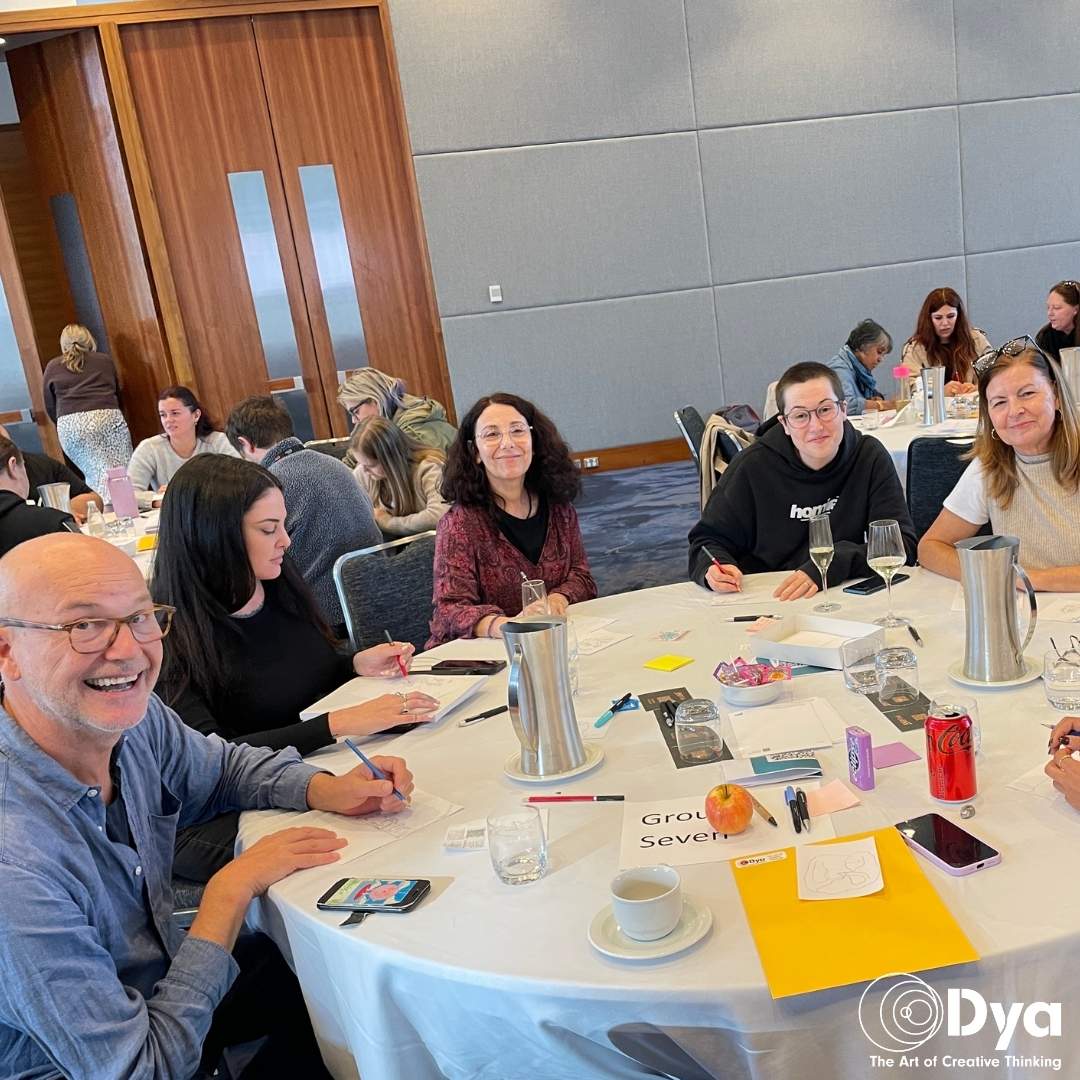
Imagine asking five colleagues to describe the same project.
One might remember the excitement of getting started. Another might focus on a difficult decision. Someone else might recall a moment when the team finally found its direction.
They’re describing the same experience, but they’re noticing different things.
That’s what makes collective reflection interesting.
We tend to see events through the lens of our own responsibilities, expectations and experiences.
Listening to another person’s perspective can reveal parts of the story we didn’t notice.
A manager may discover that a small change made someone’s work considerably easier.
A team member may learn that a colleague found an unfamiliar task particularly challenging.
These conversations can help people understand not only what happened, but how it felt from different positions within the team.
Value of Hearing Different Perspectives
Five End-of-Year Team Activities That Encourage Reflection
Reflection doesn’t need to involve a formal meeting or a lengthy presentation.
In fact, some of the most useful conversations begin with simple, creative prompts.
Here are five end-of-year team activities that can help colleagues look back in a more engaging way.
1. The Year in Three Words
Ask everyone to choose three words that describe their working year.
They might select words such as unexpected, challenging, rewarding, chaotic, collaborative or curious.
Invite people to share the stories behind their choices.
You’ll probably discover that colleagues experienced the same year in very different ways.
The activity is simple, requires almost no preparation and works well in small groups.
2. The Moments That Mattered
Give everyone a few minutes to think about one moment from the year that deserves recognition.
It doesn’t need to be a major achievement.
It might be a helpful conversation, a problem solved together or something that made a difficult week easier.
Invite people to share their moments voluntarily.
This activity shifts attention towards contributions that may not have received formal acknowledgement.
3. A Visual Timeline of the Year
Create a large timeline covering January to December.
Ask team members to add memorable events, challenges, achievements and turning points.
These could be written on sticky notes, represented through simple drawings or marked with colours.
As the timeline fills, patterns may begin to emerge.
Perhaps several important changes happened within a short period. Maybe a project that felt unsuccessful at the time eventually opened a new opportunity.
Seeing the year laid out visually can make the team’s shared journey easier to understand.
4. The Unexpected Lesson
Invite each person to complete the sentence:
“One thing I understand differently now is…”
The responses might relate to communication, problem-solving, teamwork or something completely unexpected.
This activity encourages people to recognise that learning doesn’t always arrive through formal training.
Sometimes, it comes from an ordinary conversation or an experience that didn’t go according to plan.
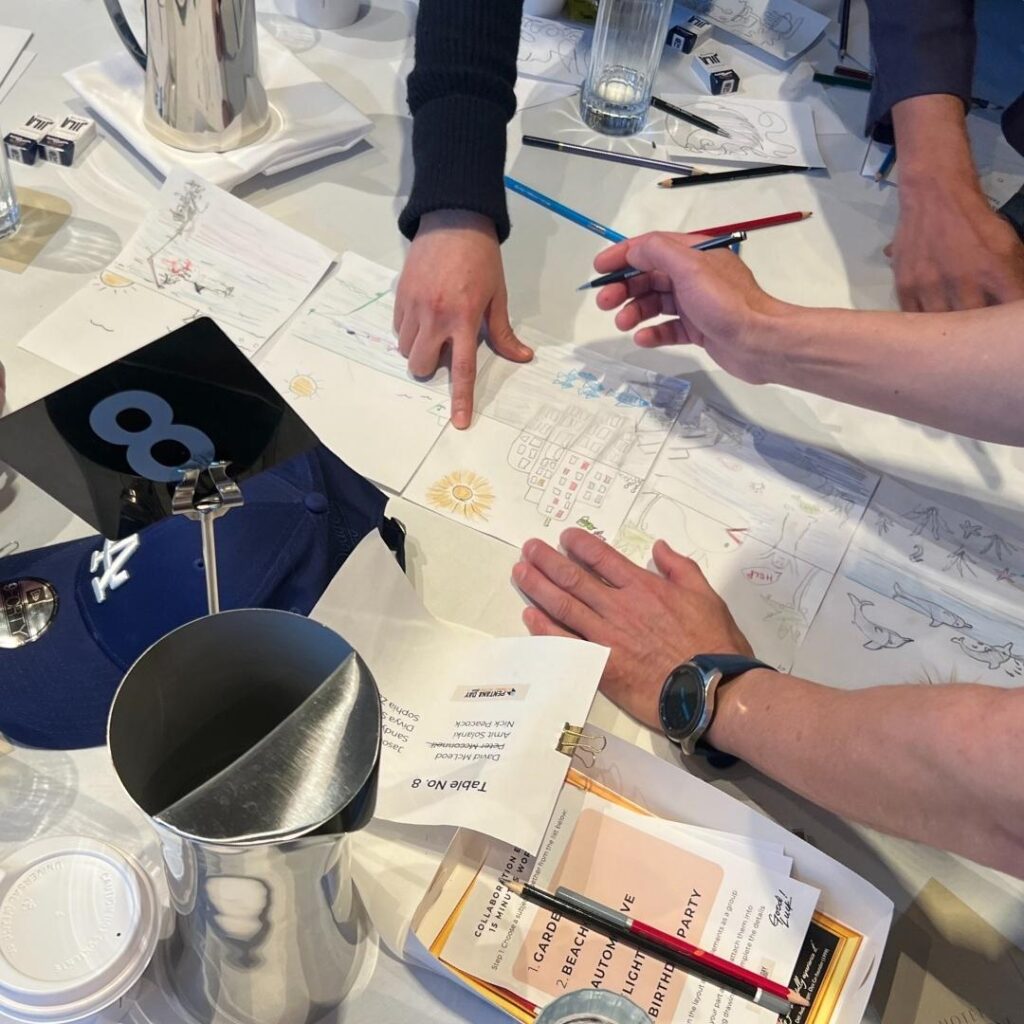
5. Create a Shared Picture of the Year
Instead of asking everyone to describe the year through words, invite the team to represent it visually.
Each person might contribute a colour, symbol, shape or small illustration to a collective artwork.
Some contributions may represent achievements. Others might capture challenges, changes or hopes for the coming year.
There’s no need for artistic experience.
The value comes from seeing how individual perspectives can become part of a shared picture.
It’s an interesting reminder that people can contribute to the same outcome without approaching it in the same way.
What About the Things That Didn’t Go Well?
End-of-year celebrations naturally focus on achievements.
And there’s nothing wrong with that.
But a year that included setbacks, uncertainty or difficult decisions can still offer valuable lessons.
The challenge is creating a conversation where people feel comfortable acknowledging those experiences.
Rather than asking, “What went wrong?”, consider questions such as:
- What did we learn from something that didn’t work as expected?
- What would we try differently next time?
- What helped us adapt when plans changed?
- What support would make a similar challenge easier in the future?
These questions encourage curiosity rather than blame.
They also help teams recognise that progress isn’t always a straight line.
Don’t Turn Reflection Into Another Task
There’s an important difference between giving people space to reflect and asking them to complete another end-of-year exercise.
By December, many employees are already managing deadlines, handovers and holiday preparations.
A reflection activity shouldn’t feel like additional homework.
Keep it manageable.
Choose one or two thoughtful prompts rather than an extensive questionnaire. Allow people to participate in ways that feel comfortable. Make sharing personal experiences optional.
And remember that reflection doesn’t need to produce a formal action plan every time.
Sometimes, recognising a shared experience is valuable in itself.
Looking Back Can Change How We Move Forward
There’s a reason people pause at the end of a journey to look at where they’ve been.
Distance changes perspective.
Something that felt overwhelming in March may seem manageable in hindsight. A decision that appeared insignificant in June may turn out to have shaped the rest of the year.
When teams take time to revisit these moments, they have an opportunity to understand their progress more fully.
They may also discover strengths they hadn’t recognised, contributions they’d overlooked and ideas worth carrying into the next year.
Among all the possible end-of-year team activities, making space for reflection might be one of the simplest.
It doesn’t require an elaborate venue or a complicated schedule.
Just a little time, a few good questions and a willingness to listen.
Because sometimes, the most useful way to prepare for a new beginning is to understand the journey that brought us here.
Come and surprise yourself. Embrace a new perspective.
At Dya Australia, creative experiences offer another way for teams to explore ideas and perspectives together. Discover our Corporate Programs or Contact us to discuss an end-of-year experience for your team.