End-of-Year Team Building: Why the Best Celebrations Aren’t Always the Biggest
As the year draws to a close, workplaces begin asking a familiar question: What should we do for our end-of-year celebration?
The usual suggestions appear. A fancy dinner, a rooftop party, an elaborate outing or an activity that promises something unforgettable.
But here’s a question worth considering: What do people actually remember about a great team celebration?
Often, it’s not the venue, the decorations or how much money was spent. It’s a conversation they didn’t expect, a shared laugh or the chance to connect with someone they usually only see in meetings.
When planning end-of-year team building, those smaller moments deserve more attention than we tend to give them.
The Difference Between Being Together and Connecting
Imagine two workplace celebrations.
At the first, everyone attends an impressive event. The food is excellent, the venue looks beautiful and the schedule is packed. People enjoy themselves, but mostly stay within their familiar groups.
At the second, the setting is simple. There’s a shared activity, a little time to talk and no pressure to impress anyone. People find themselves chatting with colleagues from different departments and discovering things they never knew about each other.
Both events can be enjoyable.
But the second may create more opportunities for genuine connection.
This is an important distinction when thinking about end-of-year team building. Gathering people in one place doesn’t automatically bring them closer together.
Sometimes, connection needs a little room to happen.
Why Bigger Doesn’t Always Mean Better
It’s easy to assume that a successful celebration needs a bigger budget, a more exciting venue or a packed schedule.
Yet the more elaborate an event becomes, the easier it is to overlook the experience of the people attending.
Some employees love large social gatherings. Others find them exhausting. Some enjoy being the centre of attention, while others prefer quieter conversations.
A memorable celebration doesn’t need to satisfy every preference perfectly. It does need to consider the different ways people feel comfortable participating.
That might mean choosing an activity where everyone can contribute without performing in front of a crowd.
It could mean creating opportunities for smaller conversations rather than relying entirely on group entertainment.
Or it might simply mean leaving enough unstructured time for people to enjoy one another’s company.
The goal isn’t to make the event smaller for the sake of it.
It’s to make the experience more thoughtful.
Why Bigger Doesn’t Always Mean Better
The Unexpected Value of Doing Something Together
Think about the difference between watching something happen and taking part in making something happen.
At a dinner, people share a table.
At a performance, they share an audience.
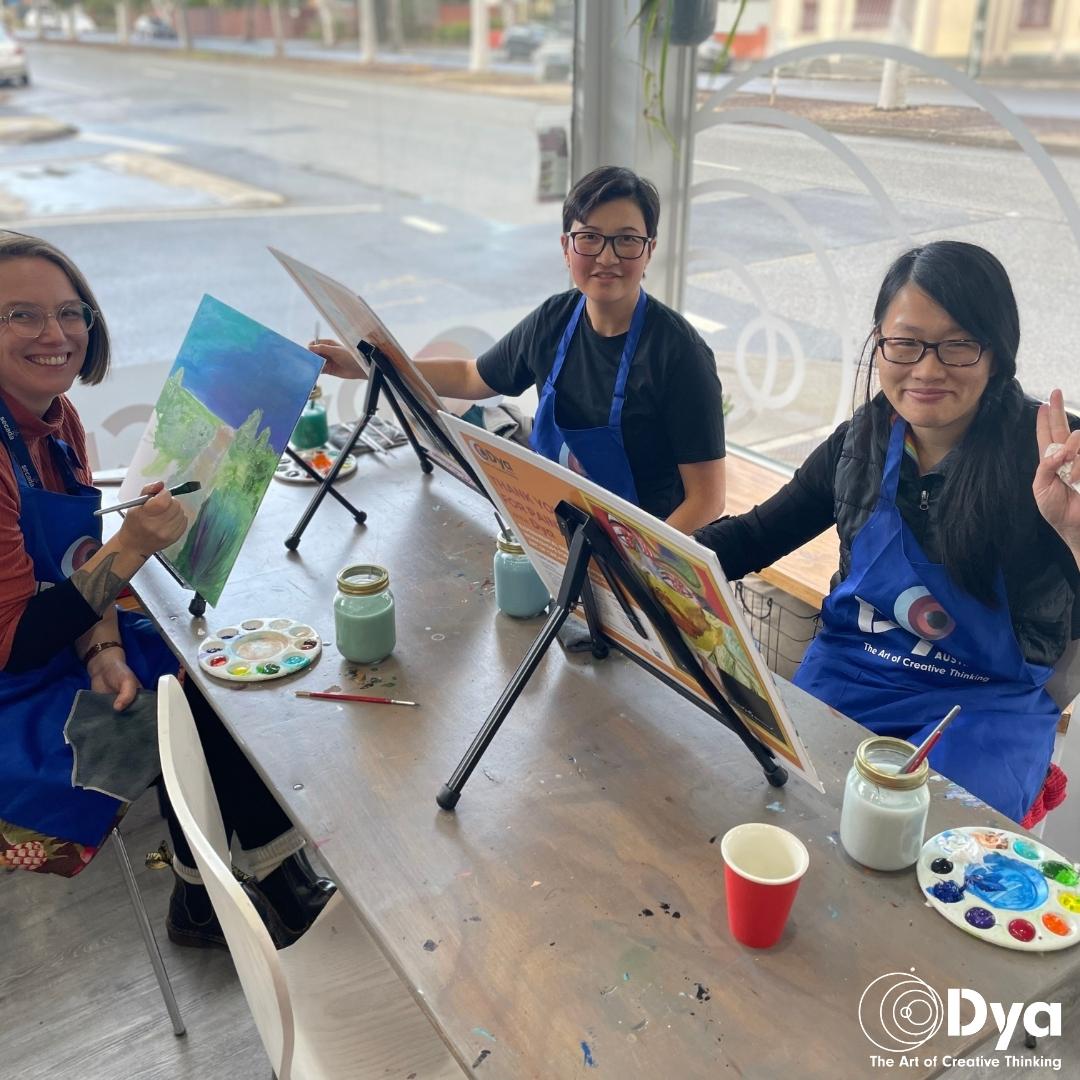
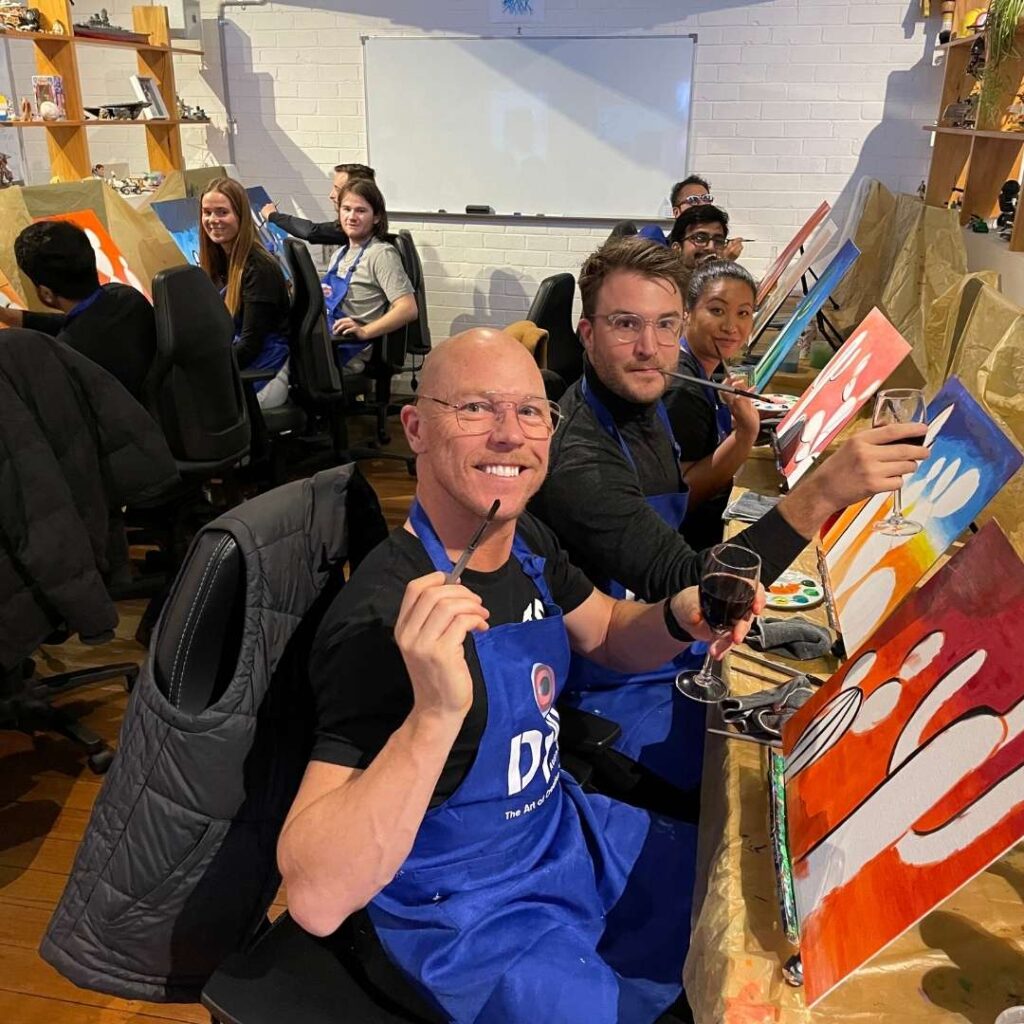
During a hands-on activity, they share an experience that develops through their own participation.
That difference can change the conversations people have.
A colleague who rarely speaks in meetings might reveal an unexpected sense of humour. Someone known for being highly organised might approach a creative challenge with complete spontaneity.
People begin seeing one another beyond their everyday workplace roles.
And because the activity provides a natural focus, conversations don’t always need to begin with the familiar question, “So, how’s work going?”
This is one reason creative activities can be interesting choices for workplace celebrations. They offer a shared starting point without requiring everyone to have the same skills or personality.
Make Space for Different Personalities
One of the most overlooked aspects of end-of-year celebrations is participation.
An activity that feels exciting to one person may feel uncomfortable to another.
Competitive games can energise some teams but leave others on the sidelines. Loud environments may suit outgoing groups while making meaningful conversations difficult.
Even seemingly harmless activities can create pressure when people feel expected to be entertaining, talented or enthusiastic.
A more inclusive approach begins with a different question:
How can we make it easy for people to join in as themselves?
Consider activities with flexible ways to participate. Give people opportunities to contribute individually and collectively. Avoid putting anyone on the spot unnecessarily.
Most importantly, remember that enthusiasm doesn’t always look the same.
The quiet colleague concentrating on a task may be enjoying the experience just as much as the person laughing across the room.
An End-of-Year Celebration Can Also Be a Moment to Reflect
By December, many teams have spent months moving from one deadline to the next.
Projects finish. New priorities emerge. Challenges are solved, and the next challenge arrives before anyone has time to acknowledge the previous one.
An end-of-year gathering offers a rare opportunity to recognise the people behind that work.
This doesn’t have to mean formal speeches or awards.
It could be as simple as inviting everyone to share something they appreciated about the year, a lesson they learned or a moment when a colleague made their day easier.
These conversations can reveal achievements that might otherwise go unnoticed.
They also remind people that the year was more than a collection of tasks and deadlines.
Five Questions Worth Asking Before You Book
Before committing to an end-of-year team building activity, consider these questions:
- Will people have opportunities to interact beyond their usual workplace groups?
- Can different personalities participate comfortably?
- Is there room for conversation, rather than constant entertainment?
- Will the experience feel enjoyable without requiring special skills?
- What do we hope people will remember when they return to work?
These questions are useful regardless of the activity or venue.
They shift the focus away from planning the most impressive event and towards creating an experience that feels worthwhile.
The Moments That Stay With Us
A successful end-of-year celebration doesn’t need to be extraordinary in every detail.
Sometimes, the most memorable moments happen when people feel relaxed enough to be themselves.
A shared challenge. An unexpected conversation. A moment of laughter between colleagues who rarely work together.
These are small things, but they can change how people experience their workplace relationships.
As you plan your next celebration, consider giving those moments a little more space.
After all, the best end-of-year team building experiences aren’t necessarily the ones with the biggest budgets.
They’re the ones that give people something meaningful to share.
Come and surprise yourself. Embrace a new perspective.
If you’re exploring a more creative way to bring your team together at the end of the year, discover Dya Australia’s Corporate Programs or Contact us to discuss your ideas.